A Walk on the South Side – from Cheltenham to The Suffolks
Introduction
Uncover the history of one of Cheltenham’s most charming districts.
This walk explores The Suffolks, a southern suburb of Regency Cheltenham. Built around a handsome square, the area is named after the former landowner, the Earl of Suffolk.
Elegant streets, mansions, villas and terraces were superimposed upon an ancient agricultural landscape, together with the supporting trades and commerce, to create a diverse urban legacy.
Starting point what3words ///rich.region.risks
Tour Information
Beginning in front of the Suffolk House apartments, the circular route takes us into Suffolk Parade, with its mix of boutique shops, cafes and restaurants. Then it heads east to reach the impressive buildings of Cheltenham College in Bath Road, before returning along Suffolk Road. On the way we will look at some landmark buildings and touch upon their history.
The walk takes about 90 minutes but you can shorten it by choosing the next point of interest you’d like to go to, or if preferred you can select your own route. Care should be taken when crossing busy roads.
To start the walk, please go to Suffolk House, in Suffolk Square, and click on the first section below. Alternatively you can click on the map and then on each red & white star symbol to access the historic information and images. The map can be enlarged by using the +/- signs, or a larger map can be opened in a new tab by clicking the top right square symbol.
This walk is copyright Cheltenham Local History Society and was created by Stuart Manton and Alison Pascoe.
We hope you enjoy this walk – do let us know if you have any questions or feedback.
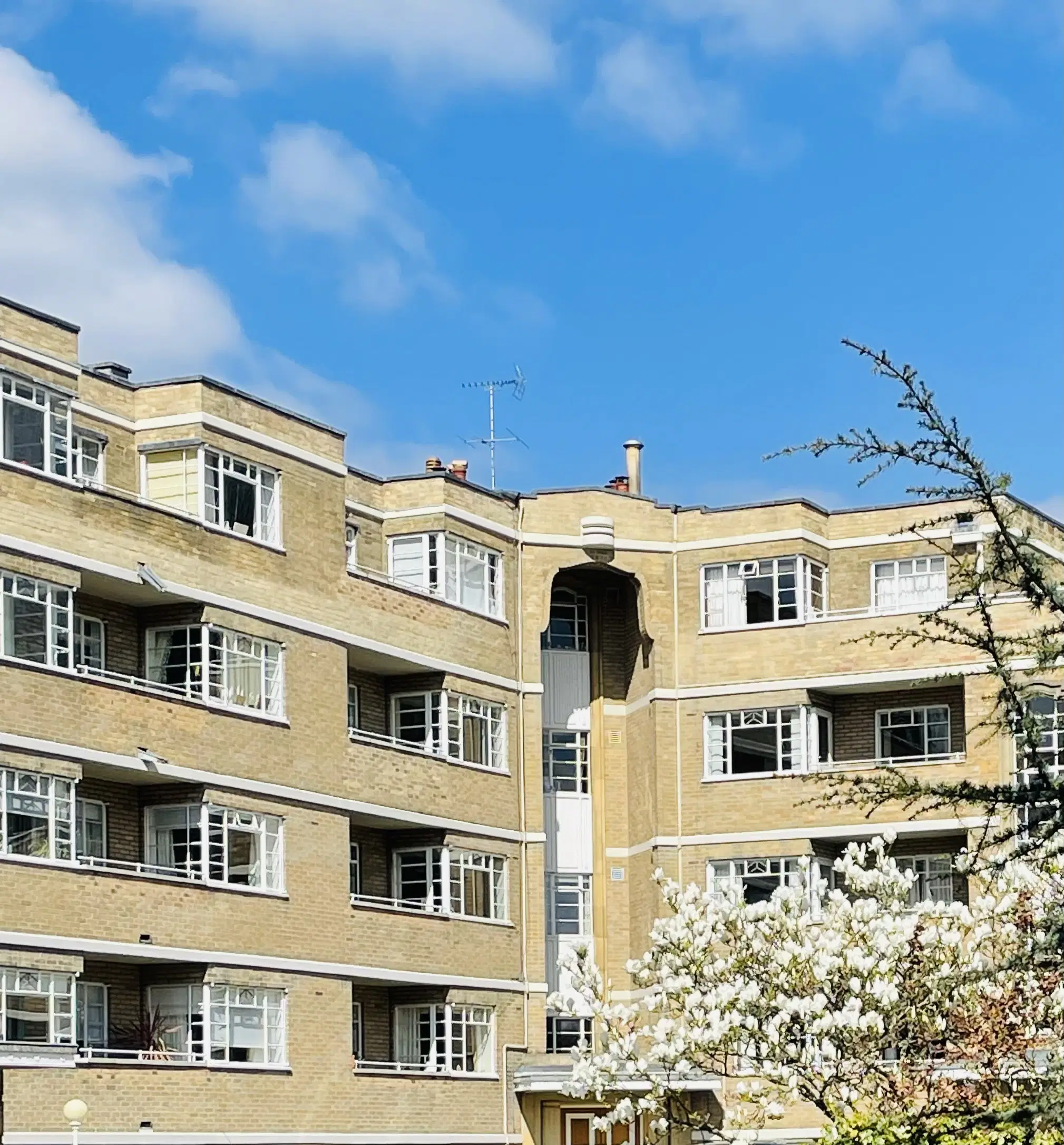
The Suffolk House apartments, constructed in 1936 in the modernist style, replaced the Regency Suffolk House mansion. This was formerly Gallipot Farm, outside Cheltenham, surrounded by fields named Home Piece, Home Close and the Lypiates. The name Gallipot may refer to a small vessel used for medicines or confections.
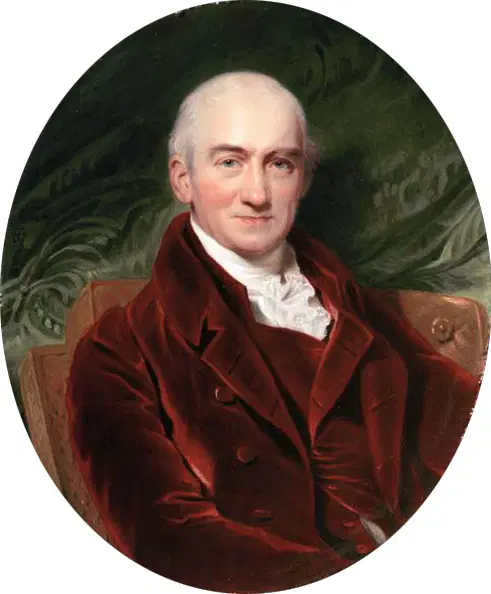
Gallipot farm was bought by local solicitor John Delabere in 1756. Around 1800-1804 his heirs sold the land to Henry Thompson, the Montpellier estate developer, and to John Howard, the 15th Earl of Suffolk.
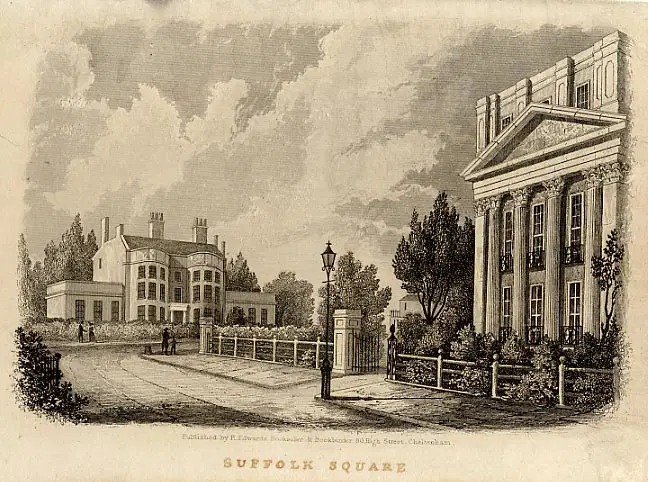
The Earl enlarged and remodelled Gallipot farmhouse in about 1808, renaming it Suffolk House. His heirs later sold part of the estate to Cheltenham hotelier James Fisher, who built Suffolk Square around 1823, with a central garden surrounded by magnificent terraces and houses on all four sides, in the classic Regency style.
At the centre of Suffolk Square is Cheltenham Bowling Club, which has been here since 1917, having relocated from the Imperial gardens.
Cross onto the pavement on the north side of Suffolk Square and walk to St James church.
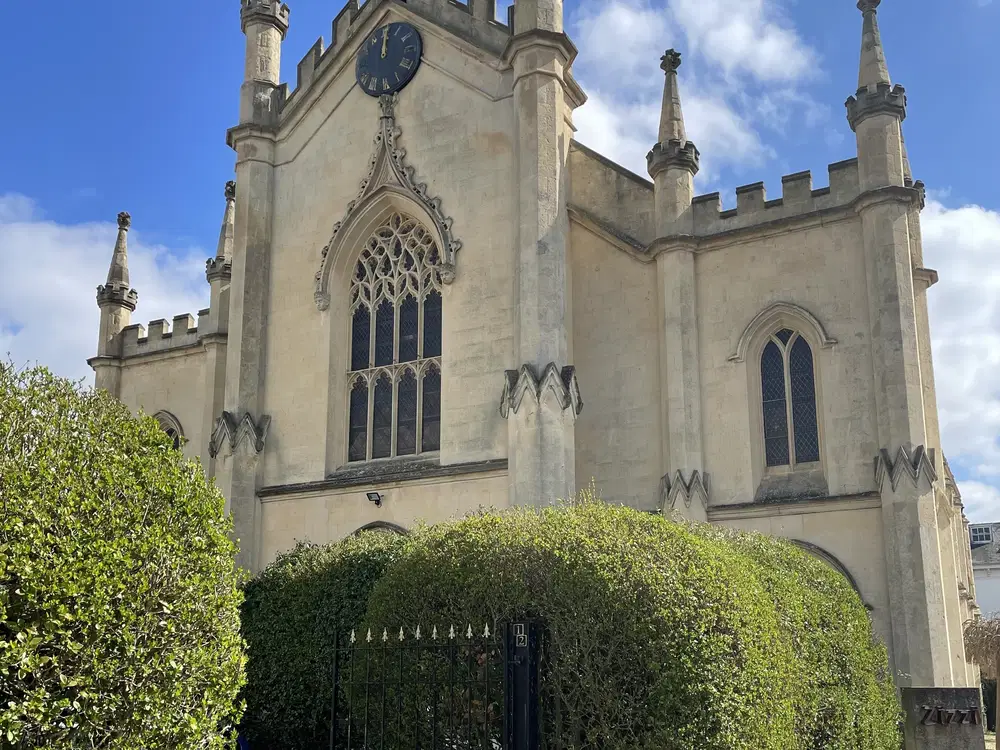
St James’ Church was built in 1825-30 on the proprietary system, whereby funds were raised by selling shares. Each ‘proprietor’ could rent their pews to other residents or to visitors.
Built of limestone, it is of ‘Regency Gothic’ style, with lighter ornamentation than many later Victorian churches. The site was donated by the developer James Fisher and the architect was Edward Jenkins.
The foundation stone was laid in November 1825 but a month later a financial crisis created difficulty in finding subscribers. This and concerns about the load-bearing strength of the columns caused delays in the work. Jenkins was replaced by J.B.Papworth, who included cast iron pillars to support the roof.
The church was completed in 1829 but not consecrated until October 1830 due to a dispute between the first Minister and the proprietors over the number of pews he had been allocated. But the church was successful and by 1840 the congregation was “the most affluent and fashionable of any in Cheltenham”.
St James’ finally closed for worship in 1976 and became St Philip & St James’ parish hall. In about 2004 it was sold by the Church and converted into a branch of the restaurant chain Zizzi.
Walk south along Suffolk Parade until you come to The Daffodil on the left.
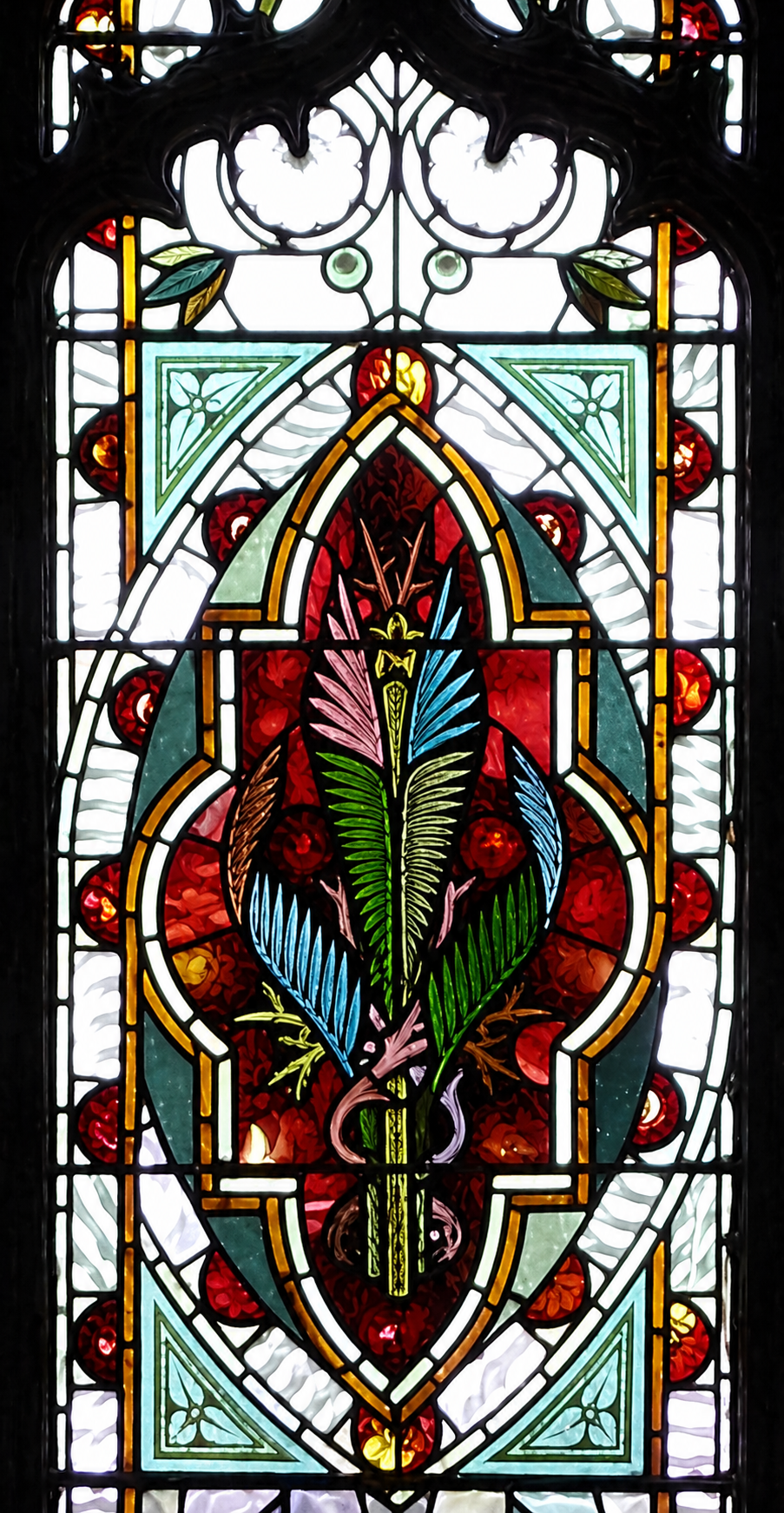
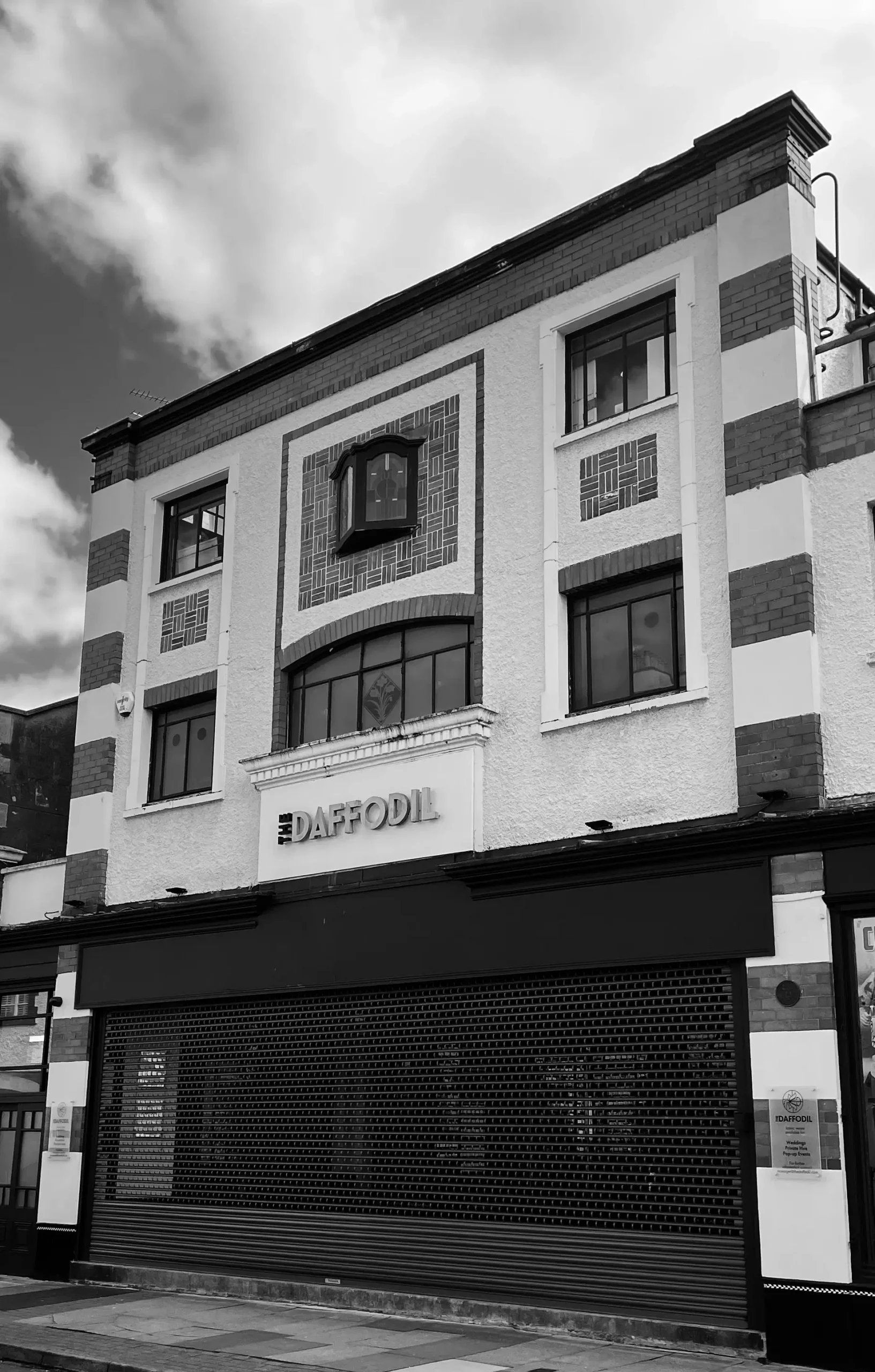
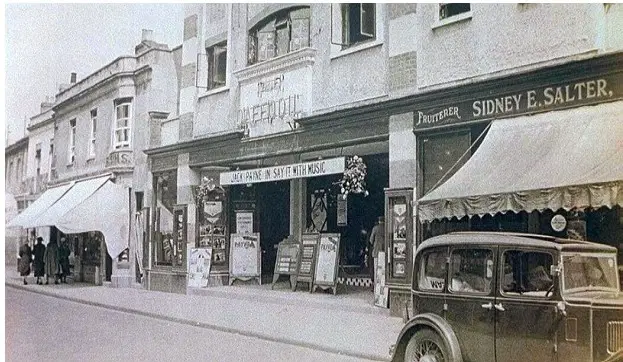
The Daffodil Picture House, the first purpose-built cinema in Cheltenham, was opened in 1922 by Frederick Sims, a baker from next door. It had 750 seats, including some doubles for use by courting couples. The building has many period features, including repeated use of the daffodil motif.
Films were silent, accompanied by a full orchestra for dramatic effect, until a sound system was installed in 1930. A few were in full colour as early as the 1920s. Performances were continuous between 2.30pm and 10.30pm. The first film to be shown was ‘Thunderclap’, made in 1921 by the Fox Film Corporation.
Attendance fell away in the 1950s and the cinema finally closed on 7th September 1963. Continuing as a place of entertainment, it immediately reopened as a bingo hall. In the mid 1990s it became a successful restaurant but this closed in August 2022 and the future looks uncertain.
Return to Daffodil Street and turn left into Montpellier Villas.
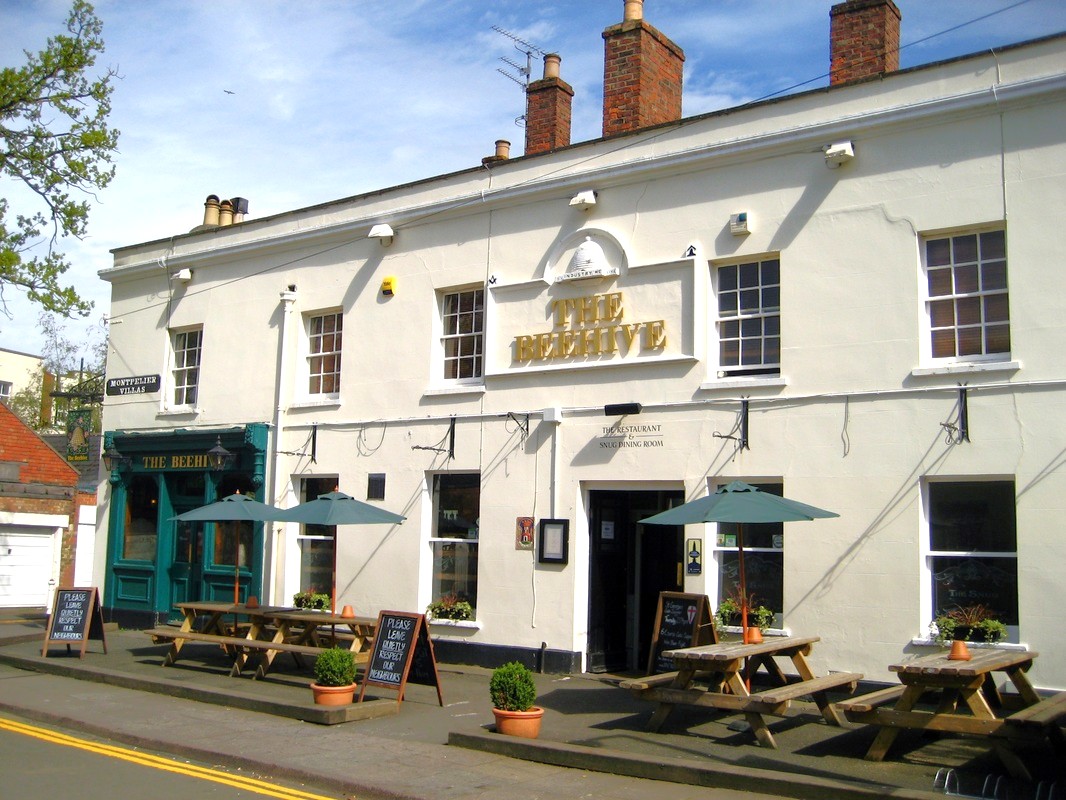
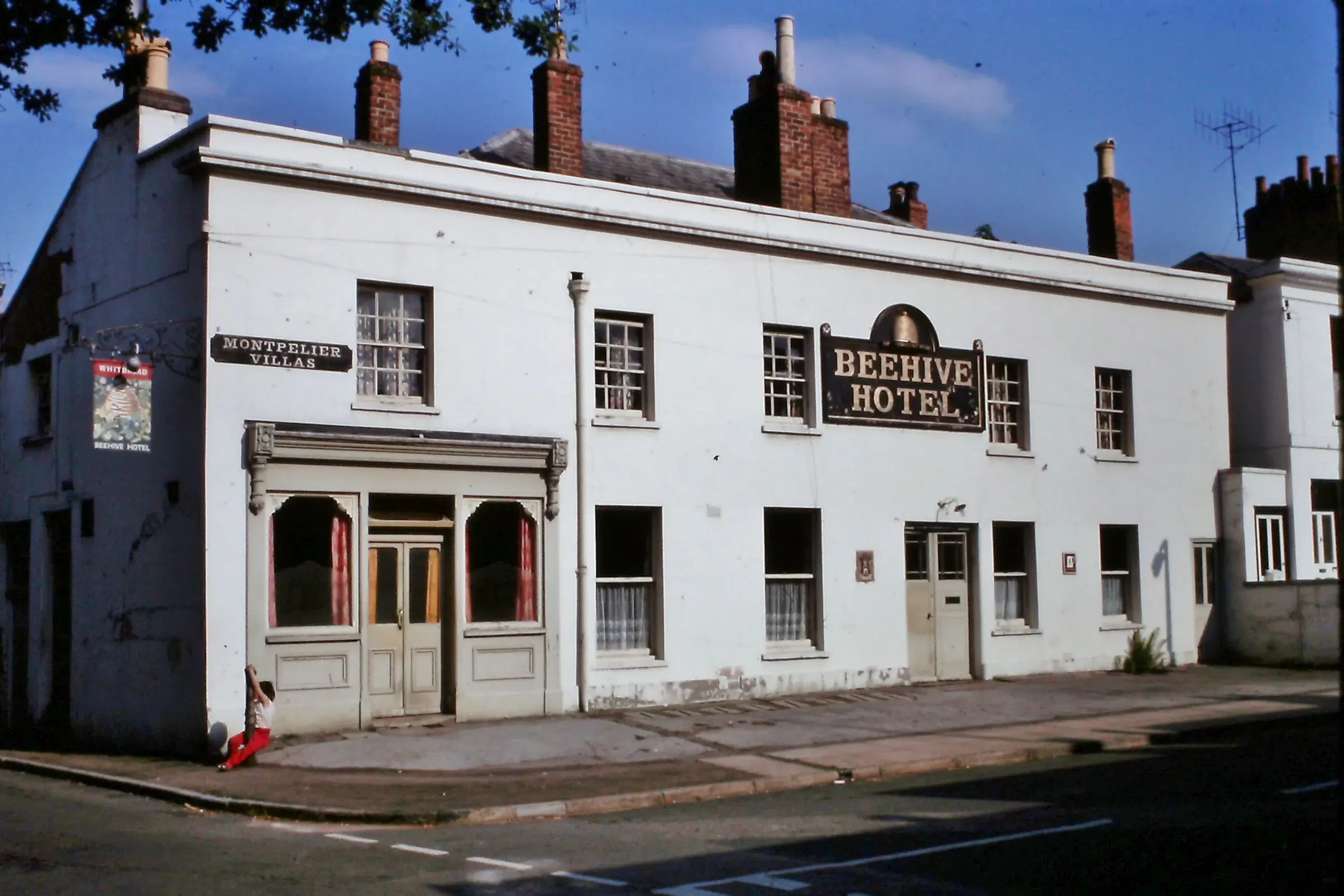
Designed by John Forbes, the architect of the Pittville Pump Room, the inn dates from 1822. An early landlord, Mr James Carter, celebrated the birthday of Princess (later Queen) Victoria in 1837 by displaying a large illuminated star at the front of the building.
Upstairs is a large assembly room, which is now a restaurant. It once accommodated meetings of the Independent Order of Oddfellows, an international fraternity first documented in 1730. The beehive symbolises working together for the common good, the purpose of the Oddfellows, hence the pub’s name.
A map of 1857 shows that a gentlemen’s urinal was located on the pavement in front of the inn, which must have been a great relief to patrons, if not to local residents!
In December 1886 the Beehive suffered a fire. The gas lamp lighter was on his round at 6.20 am, turning out the street lights, when he noticed a fire through the glass door. The alarm was sounded at the fire station at 6.45am and the brigade turned out promptly, followed by the police. They found the bar, the cellar and a bedroom above in flames. It took an hour to get control and the damage was estimated at around £200 (more than £20,000 in today’s money).
In the 20th century the Inn was a favourite destination for the doctors and nurses from nearby Cheltenham General Hospital and remains at the heart of the local community.
Proceed to Back Montpellier Terrace, which marks the line of an ancient field track, and turn right. Walk to Bath Road and stand in front of Cheltenham College.
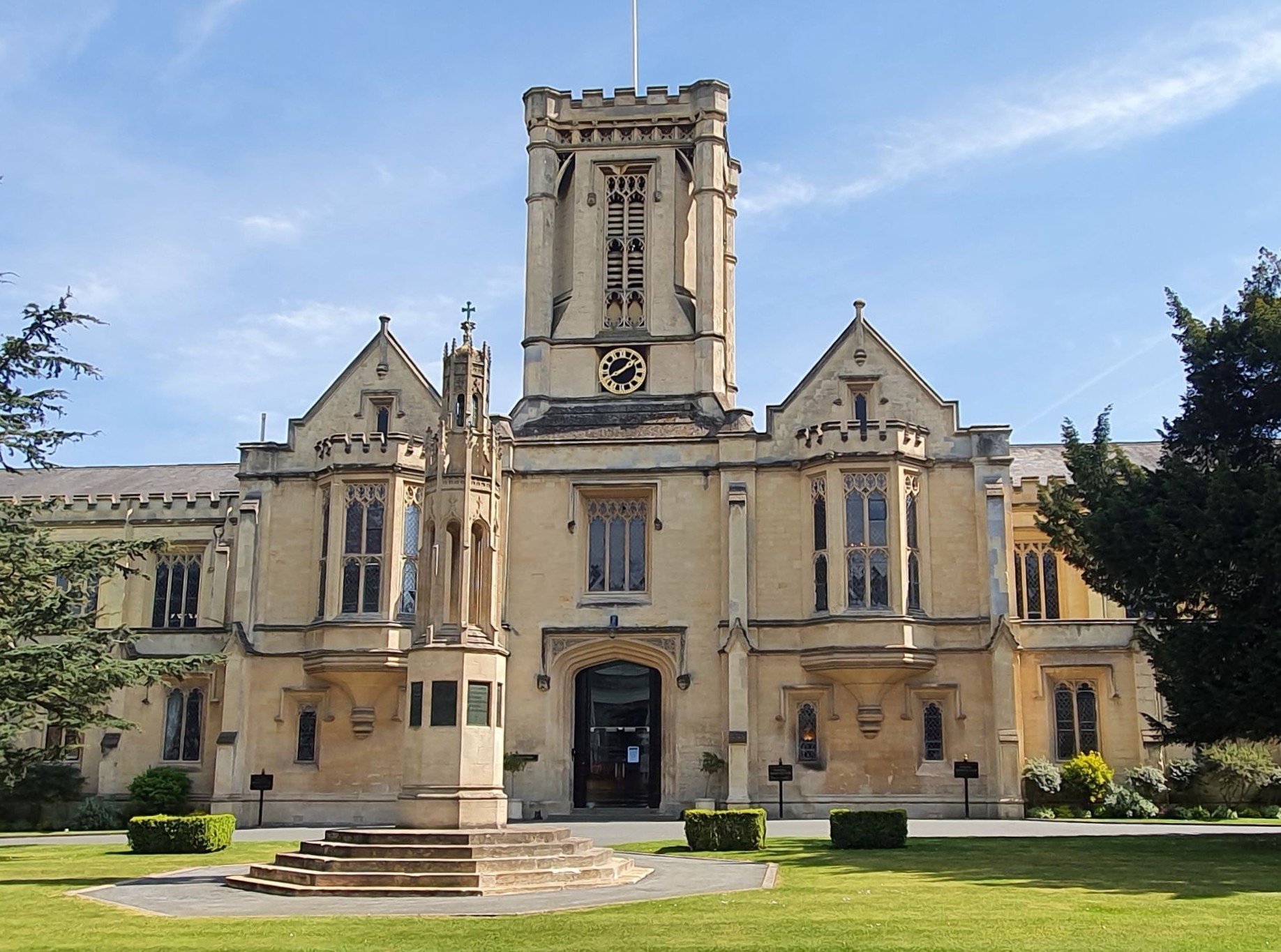
Cheltenham College opened in a house in St George’s Road in 1841, relocating to these new buildings in 1843. The school and its playing fields occupy a large part of the former Sandford common field.
Facing the Bath Road, the original range is in Victorian Gothic style, superimposed on a Georgian floor plan, with symmetrical wings and a central tower with octagonal turrets. The 1860s southern range was designed by local architect John Middleton, whilst at the northern end is the 1896 chapel by H. A. Prothero, in the King’s College Cambridge tradition.
The school was founded by retired army officers of the East India Company. Its aims were to prepare boys for university, the army and the East India Company’s colleges. By the late 19th century it was well known as a school for future soldiers. The octagonal memorial commemorates those who lost their lives in the South African war of 1899-1902.
Many local traders benefitted from the presence of the school. James Tyler, a baker from Suffolk Parade, ran the tuck shop in the 1840s and sold various delicacies including “tuppennies”, a small pie made of fruit, gooseberries, apples or plums.
Walk to the junction with Suffolk Road and face the Cotswold Physiotherapy Centre.
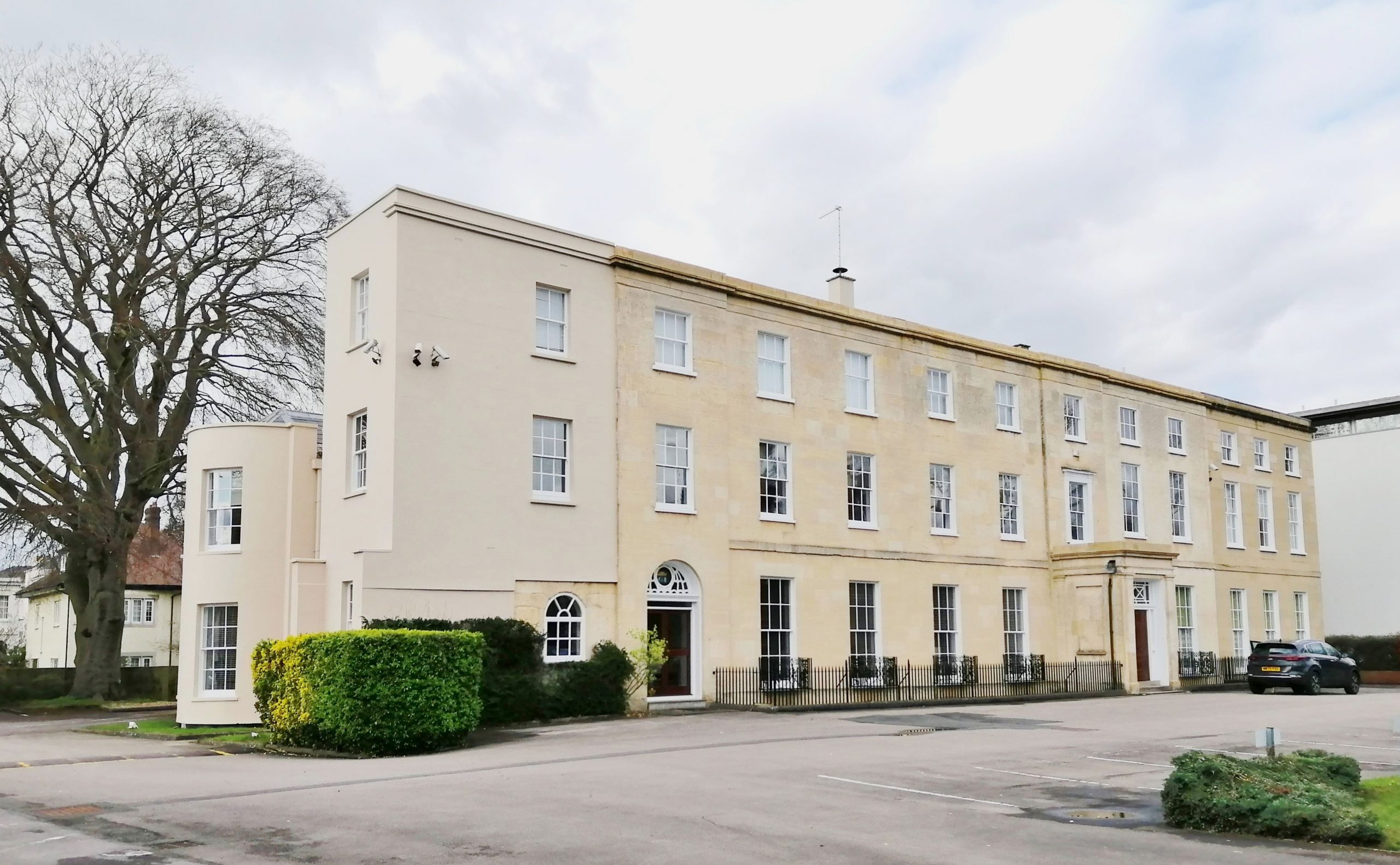
Suffolk Road was once an ancient farm track across the Sandford and Westall open fields. Two centuries ago, then called Commercial Road, it marked the southern limit of Cheltenham.
Formerly known as Sandford Lawn, this 1820s property later became the home of Major General John Swiney of the Madras Army and his wife Rosa. He was born at Fort William, Kolkata (Calcutta), in 1832, from a line of Indian Army officers. His father and uncle were founding subscribers to Cheltenham College, of which he was an early pupil.
Rosa was the co-founder of the Cheltenham branch of the National Women’s Suffrage Society and served as its President in 1907, supported by her husband. She often wrote about the suffrage movement in the local press and hosted conferences and garden fetes at their home.
Shortly after Rosa’s death in 1923 this became Madame Ethel Irving’s Academy of Dancing and Dramatic Art. She installed an ex-army hut in the grounds to form the “Little Theatre”. It could seat 200 and hosted shows by the Academy students.
In 1937 Mrs Irving converted Sandford Lawn into a hotel, appointing her son Charles as manager in 1943. A dynamic businessman and local politician, he served as the Mayor in 1957 and 1971 and was Cheltenham’s MP from 1974-1992. He was knighted in 1990 and following his death in 1995 arranged for his ashes to be scattered over Cheltenham from a light aircraft.
Walk along the north pavement of Suffolk Road until you are facing The Guild Hairdressing.
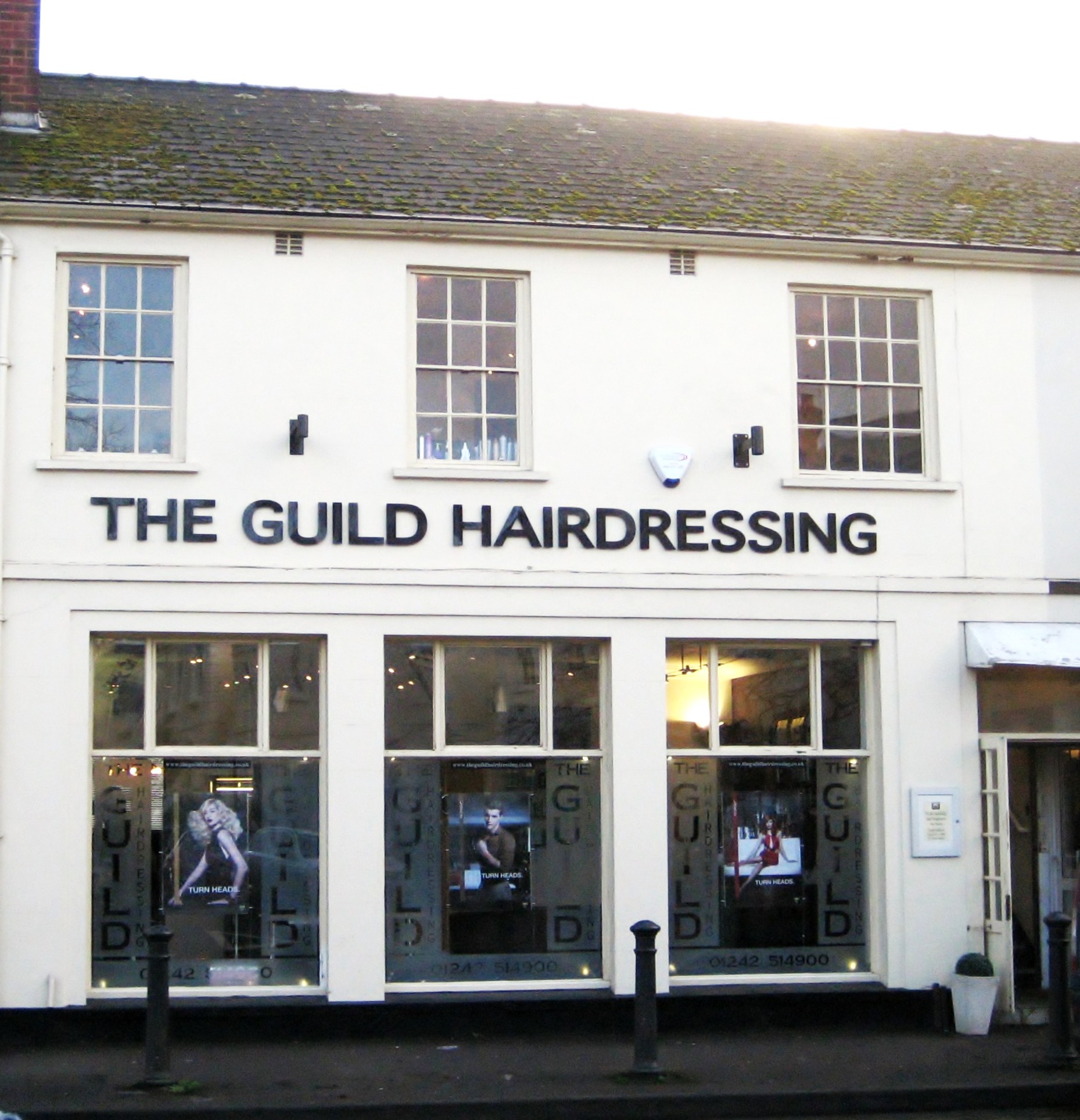
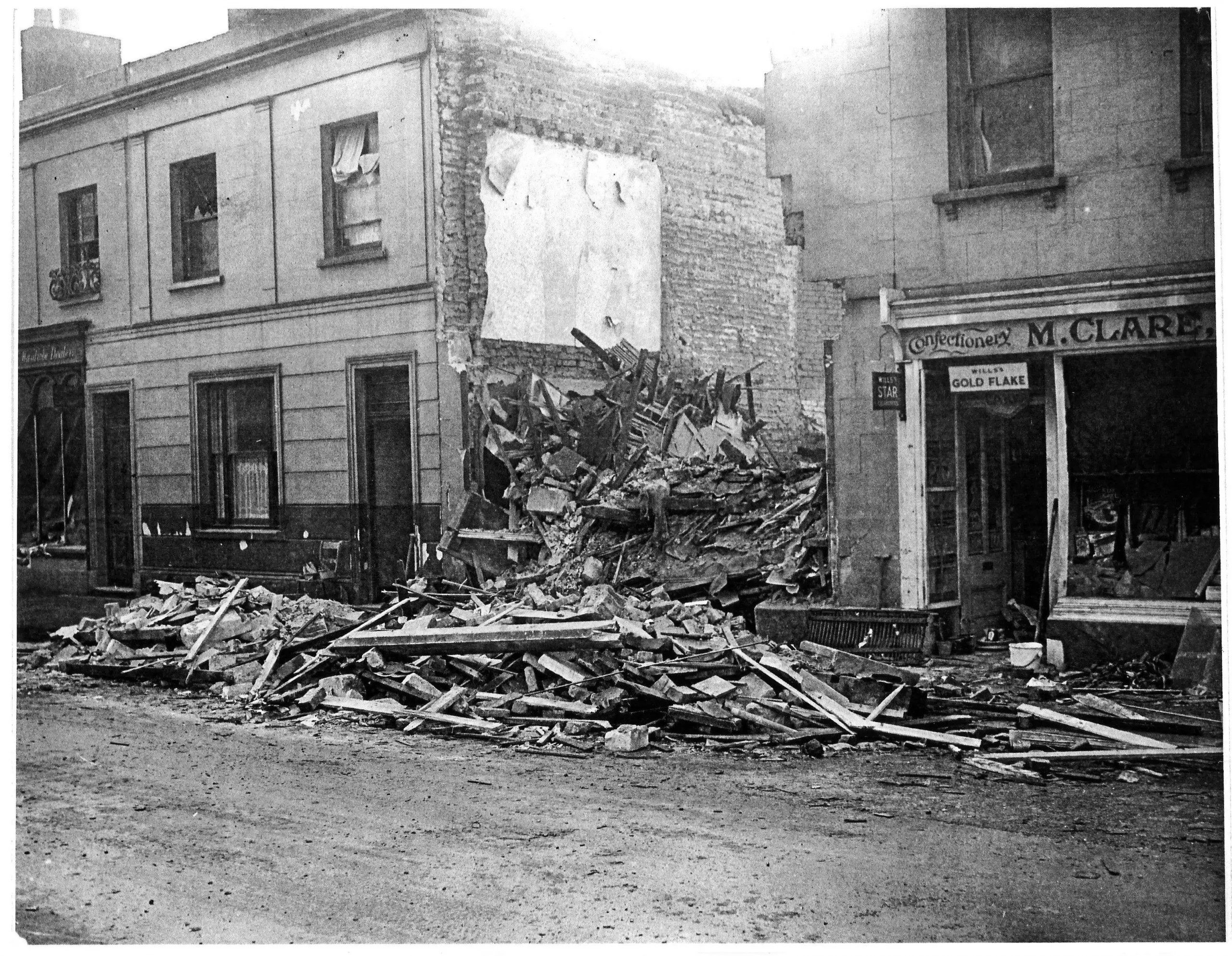
This building was formerly the site of numbers 9 & 10 Northwick Terrace, once a continuation of the 1830s row to the left.
In the mid 20th century the occupants suffered a terrible fate which would have been unimaginable to earlier generations. In an air raid on the dark evening of 11th December 1940 more than 100 high explosive bombs and many incendiaries were dropped on Cheltenham. A bomb hit this house destroying the property and killing Mrs Annie Elizabeth Iles, aged 55. In total 23 people died and 600 lost their homes that night.
Newspapers were unable to report air raids during the war but the Gloucestershire Echo, in May 1945, described the appalling event.
“Viewed from the centre of town the attack was an unforgettable and terrifying spectacle, with anti-aircraft guns blazing away, shrapnel exploding in the star-lit sky, and bombs crashing down with a violence that shook the whole town.”
The ruined properties either side of 20 Suffolk Road were rebuilt after the war.
Walk further along Suffolk Road until you are opposite The Suffolk Arms.
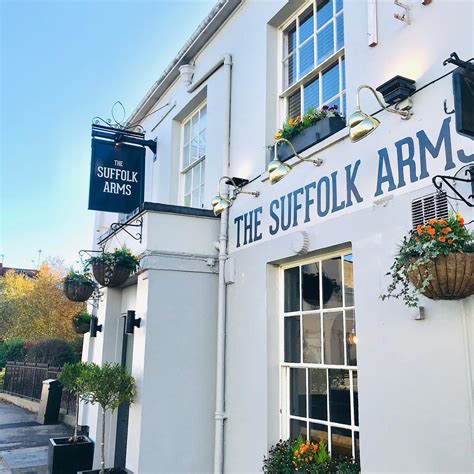
The Suffolk Arms, from 1824, is probably the oldest building in this street. The site was once part of New Grotten field, which belonged to Charles Brandon Trye, Lord of the Manor of Leckhampton.
Public houses were once the venues for auctions and coroner’s inquests. An early house auction was held here at the Suffolk Arms on 31st May 1827, in the reign of George IV.
Slightly before Queen Victoria was crowned in 1837 Charles Scott took over the inn, advertising well-aired beds and good stabling for his guests’ horses. Commercial travellers and visitors to the Cheltenham races, then held high up on Cleeve Hill, were frequent customers.
In the late 19th century the inn hosted ‘Smoking Concerts’, consisting of live music, before a men-only audience. The evening could also include political discussion and these events were popular well into the 20th century.
In April 1896 Edward Stephens, who claimed to be delivering milk here, was fined 10 shillings (50p) for not having proper control of his horse and cart. He left the rig outside for half an hour without chaining the wheels to prevent the horse bolting. Runaway horses were a common hazard.
Walk further along Suffolk Road until you are opposite Armada Antique Crystal Chandeliers.
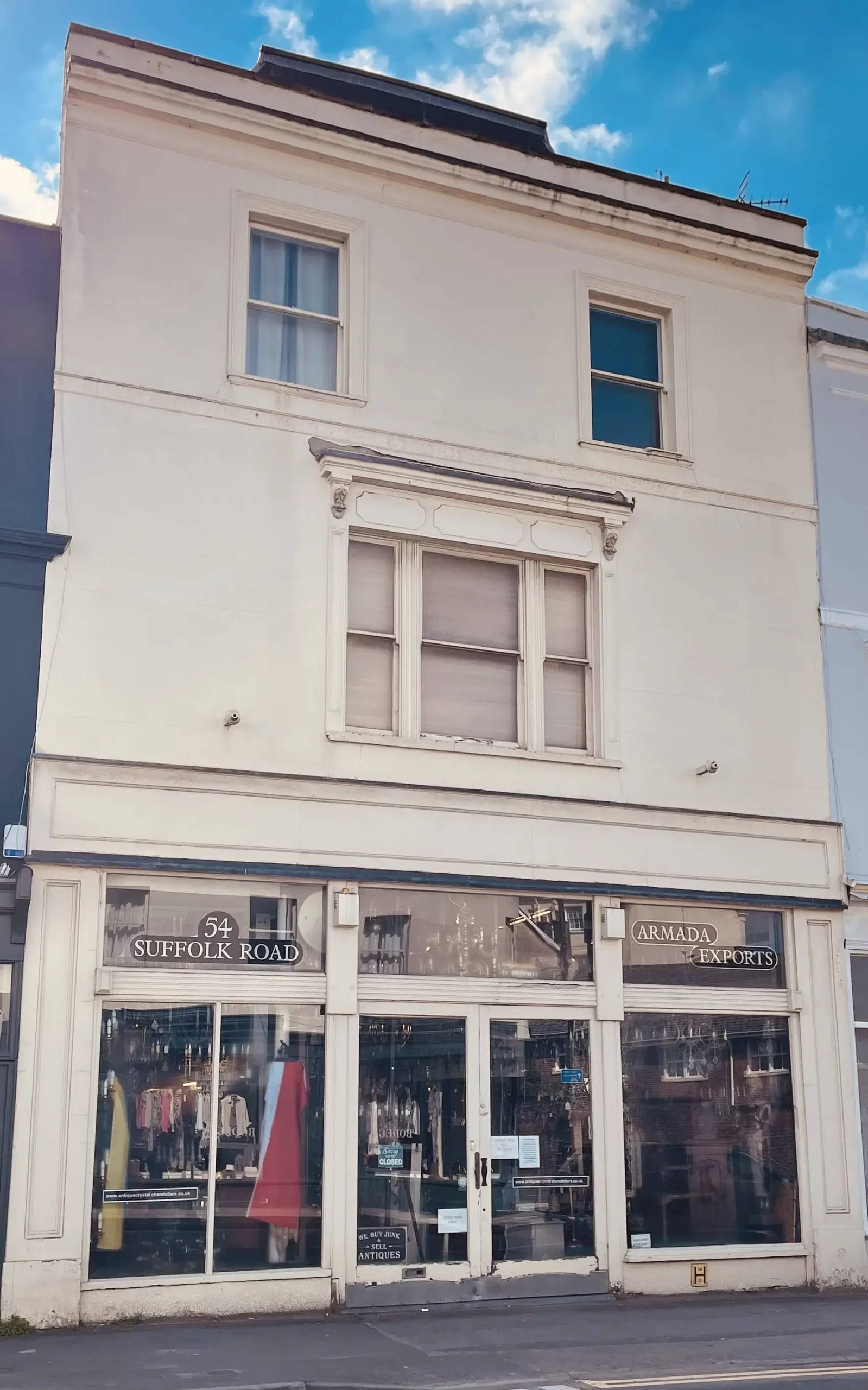
In the early 19th century limestone from the Leckhampton quarries was worked here in stonemasons’ yards. These premises were built after 1850 and became the ‘Bon Marche’ drapery store in 1880. The name roughly translated as “good value”.
In 1886 Ralph Negus advertised a “Bazaar and Fancy Fair” at this shop and at Christmas 1906 the Bon Marche sold aprons, gloves, hosiery, post card albums, watches, clocks, dolls and toys. By 1909 they had a counter where everything could be bought for one penny. The shop closed sometime after 1921.
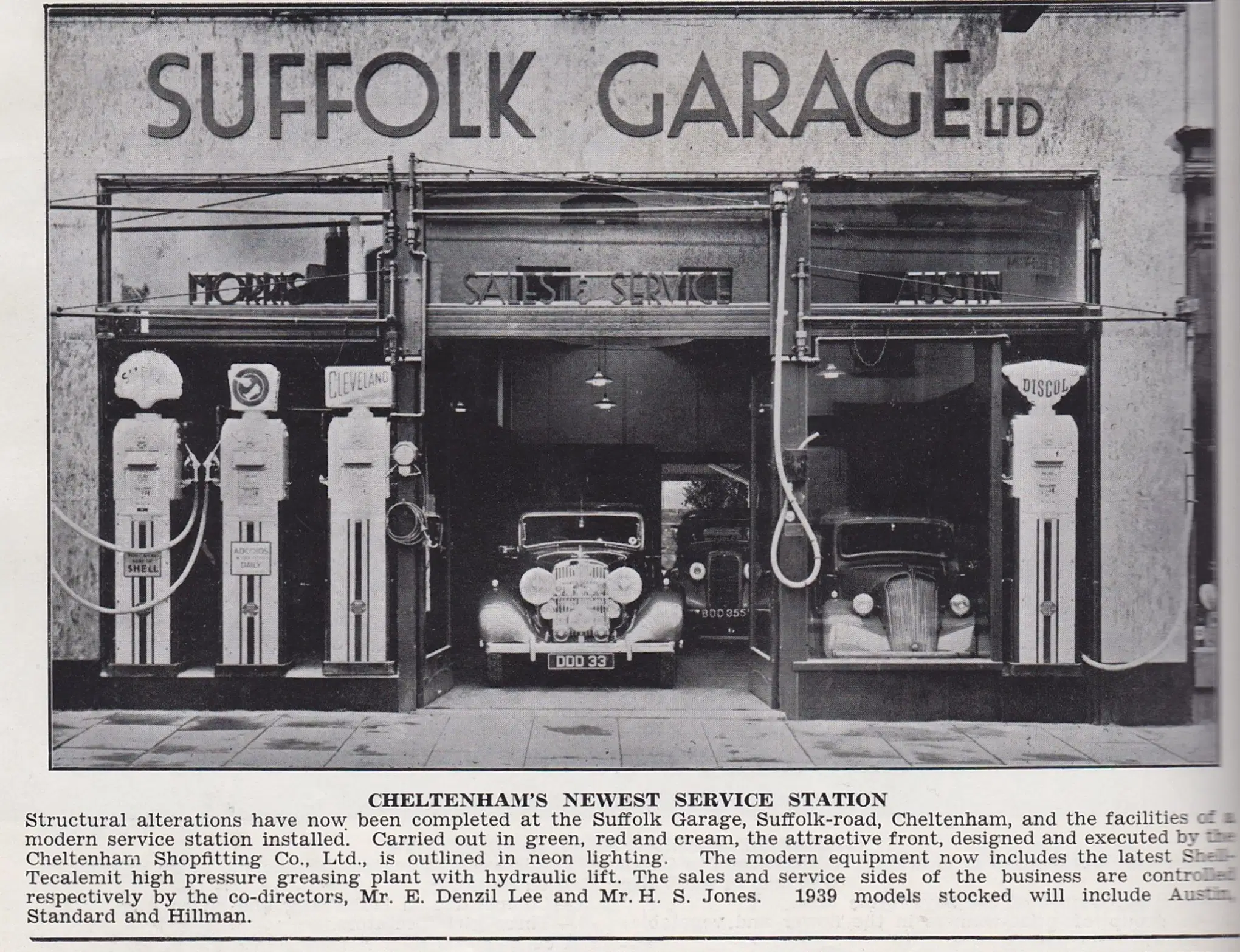
In 1925 Reed and Patterson opened the Grafton Garage here. They were authorised distributors for Daimler motor cars, with saloon models priced at £700 (the average weekly wage was about £5). In 1927 this became a branch of Cheltenham and Gloucester Car Mart Ltd, the largest car dealers in Gloucestershire and in 1933 the Suffolk Garage acquired the property as agents for Austin, Standard, Morris, Hillman and Lagonda motor cars.
In 1938 the business was taken over by Gloucestershire Motors, who during the Second World War sold mostly used cars and bought vehicles for government service. After the war they became the Citroen county distributors, continuing to trade at 54 Suffolk Road until at least the late 1960s.
Walk to the corner of Suffolk Parade.
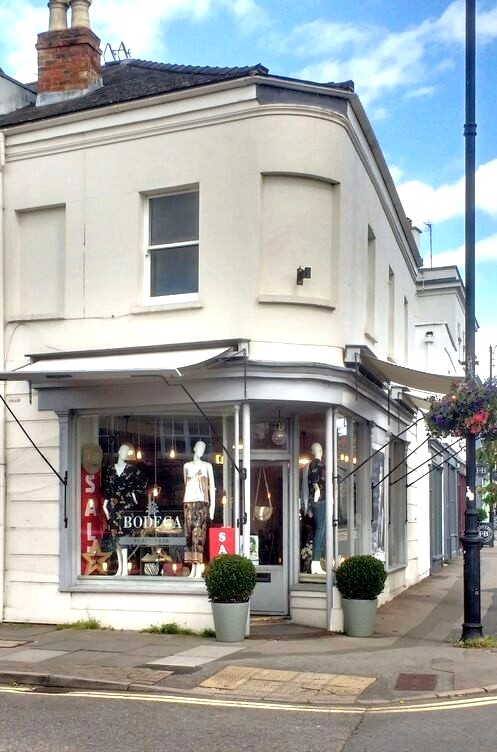
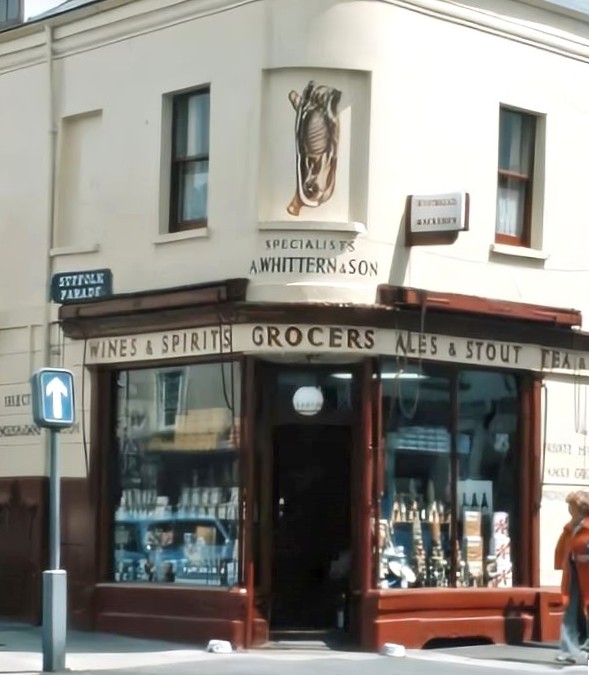
This shop was in the same trade longer than any other in Suffolk Parade. From at least 1838, beginning with Mr John Lapidge, it was a grocery and tea dealership.
In April 1909, as White’s Stores, the building suffered a serious fire, discovered at 2am by a neighbour who rode to the fire station on his tricycle to raise the alarm. Meanwhile Mr White rushed to the shop from his home in Montpellier Villas.
The fire brigade was alerted 2.15 am and despatched the ‘Theobald steamer’ fire engine. It took 2 hours to get the fire under control, by which time about £1,000 of damage had been caused. Highly inflammable sugar stored in the basement may have added to the conflagration.
In 1932 Allan Whittern took over the grocery shop, which had traditional mahogany counters and staff wearing long white aprons. Dry goods were measured out from drawers under the counter, whilst butter and cheese were cut by hand and sold by weight. He was here until his death in 1982 and was succeeded by his son, Alan. After Whittern’s closed in 1991 the shop became an antiques store and more recently a ladies fashion boutique, with some of the fittings preserved from the grocers shop.
From here you may wish to take a short detour into Great Norwood Street with its boutique shops and welcoming cafes. Then continue along Suffolk Road until you near the traffic lights at the junction with Suffolk Square.
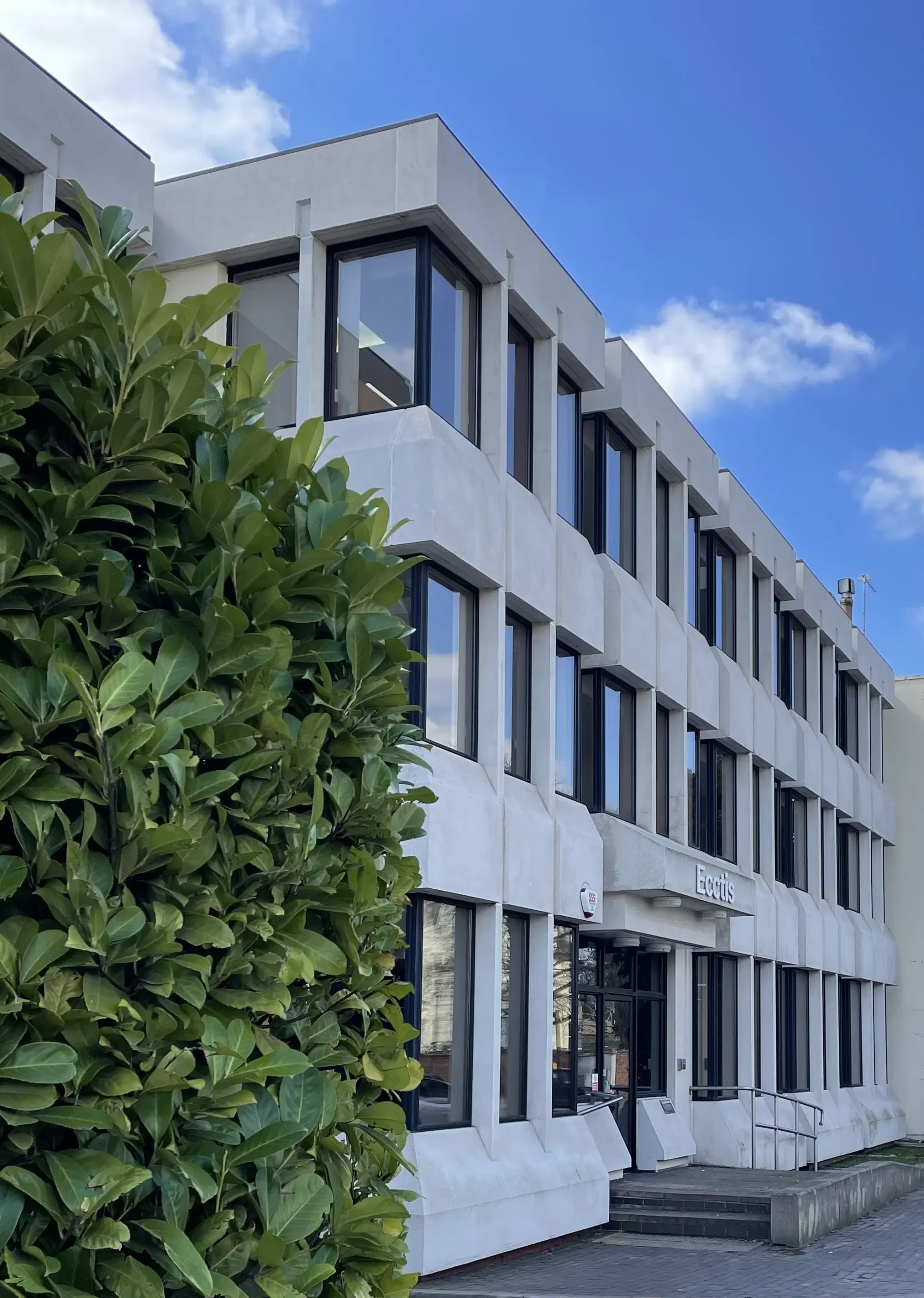
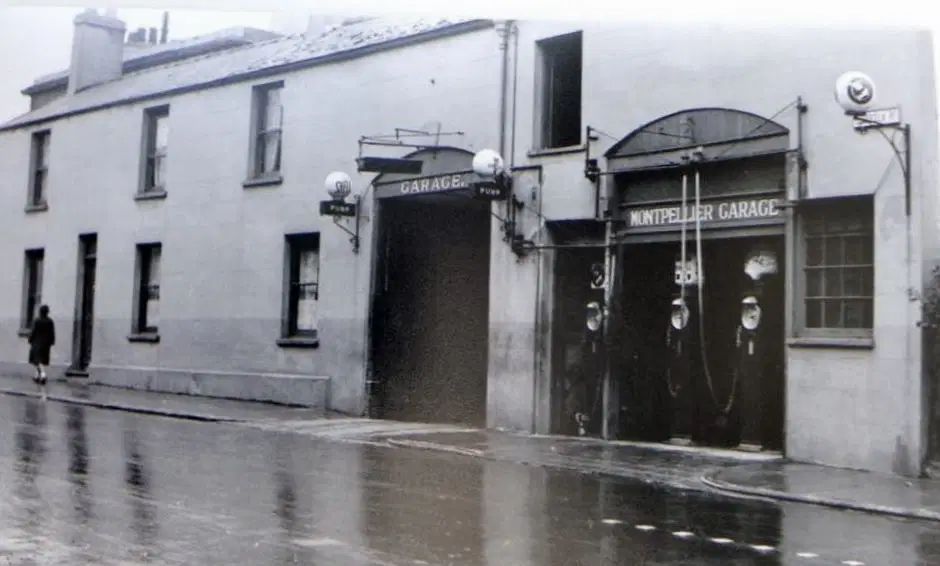
This site witnessed a remarkable continuity of trade and an important social and technological transition. The modern office block standing here conceals a 140 year history associated with road transport. In 1830 this was known as Suffolk Mews, consisting of stables and coach houses surrounding an open yard.
The first proprietor was Mr Richard Addis. In 1837, as a ‘flyman’ living in nearby Montpellier Villas, he drove a ‘fly’, or light vehicle, that could be drawn by a single horse, often on hire.
By 1906 the business was owned by William Thomas Smith, who ran horse-drawn ‘brake’ trips to Birdlip on Saturday and Wednesday afternoons – early closing days for Cheltenham shops. In 1907 he advertised two loads of horse manure for sale weekly!
Mr Smith was at Suffolk Mews for the next 13 years, during momentous change. The business was now called Montpellier & Suffolk Mews and used telephone number 121.
This was the dawn of the motor car and from 1910-1918 horses and motor vehicles shared Suffolk Mews. By 1915 it was called the Suffolk Mews Garage and the company was running taxis. The Gloucestershire Echo later claimed that this was the first motor taxi service in Cheltenham.
Suffolk Mews was renamed the Montpellier Motor & Garage Co. in about 1920. Modern repair shops were installed and the company had taxis, open-top cars, light lorries and a charabanc, with space for 30 cars. By 1926 the garage belonged to Herbert Sumner, who drove horse carriages as a young man. It traded for almost 60 years, later selling petrol as the Montpellier Service Station and closed in about 1980, ending the association with road transport.
Either return to Suffolk Square and the end of the walk or enjoy a short diversion to explore Park Place.
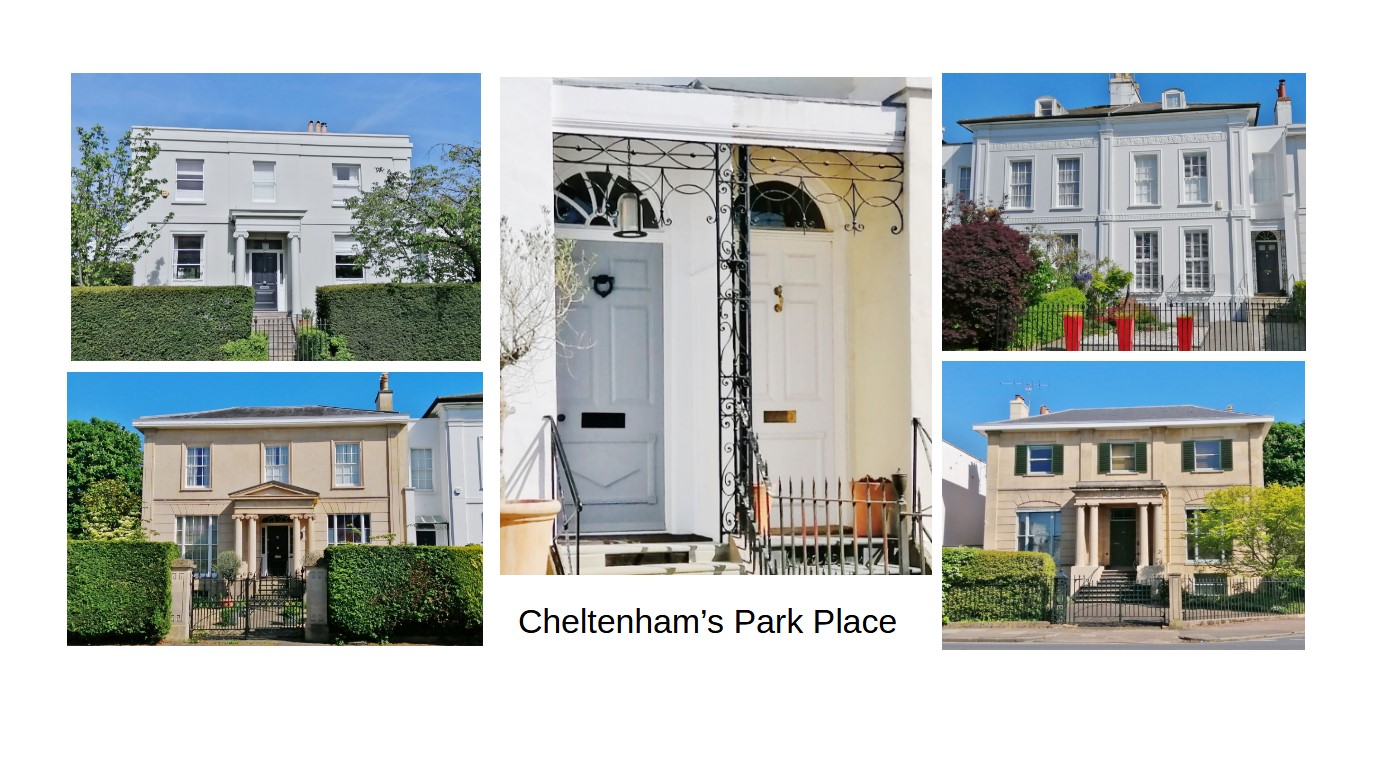
Before returning to Suffolk Square you may wish to cross Suffolk Road and take a short stroll along Park Place.
These fine villas were the first to be developed for the gentry to the south of Suffolk Road, in 1823, when they would have been surrounded by fields.
By 1834 most of the northern stretch of the road was fully built-up with a fine set of smaller villas, forming terraces or separate buildings. They display a harmony that is the mark of ‘Regency’ Cheltenham and several had the finest examples of local ironwork.
Retrace your steps to Suffolk Square and the end of your tour, or stroll back to Suffolk Parade and Great Norwood Street to browse the shops and cafes and enjoy a well-earned refreshment.
For more information about all of the places mentioned above, and more, see our Cheltenham South Town website www.cheltenhamsouthtown.org.uk
If you have enjoyed this Cheltenham Local History Society walk do explore our other historical Cheltenham walks. Or, to find out about becoming a member, click here.