The Upper Bath Road – 200 Years of Trading History
Introduction
Uncover the history behind Cheltenham’s thriving Bath Road community.
This walk explores the Upper Bath Road, the town’s main southern shopping area. Here, rapid urban development overtook an earlier industrial enterprise and absorbed the fields, streams and country byways.
A horse-drawn tram road was built through what was a rural landscape in 1810, from the quarries on Leckhampton Hill. This influenced the later street pattern and provided employment.
Meanwhile, after 1813 the New Bath Road cut a swathe through the farmland to become the town’s principal southern highway. Shopkeepers settled along the road to serve the inhabitants of the mansions and elegant terraces to the west and a growing working-class population.
Starting point what3words ///figure.bench.awards
Tour Information
Beginning at the Norwood triangle, the route takes us southward to The Norwood Arms, before turning into the Upper Bath Road shopping district. It then heads north to Thirlestaine House, at the junction of Bath Road and Suffolk Road, stopping to look at some landmark buildings and touch upon their history. The area is very well provided with places to shop and for refreshment.
The walk takes about 90 minutes but you can shorten it by choosing the next point of interest you’d like to go to, or if preferred you can select your own route. Care should be taken when crossing busy roads.
To start the walk, please go to the Norwood Triangle and click on the first section below. Alternatively you can click on the map and then on each red & white star symbol to access the historic information and images. The map can be enlarged by using the +/- signs, or a larger map can be opened in a new tab by clicking the top right square symbol.
This walk is copyright Cheltenham Local History Society and was created by Stuart Manton and Alison Pascoe.
We hope you enjoy this walk – do let us know if you have any questions or feedback.
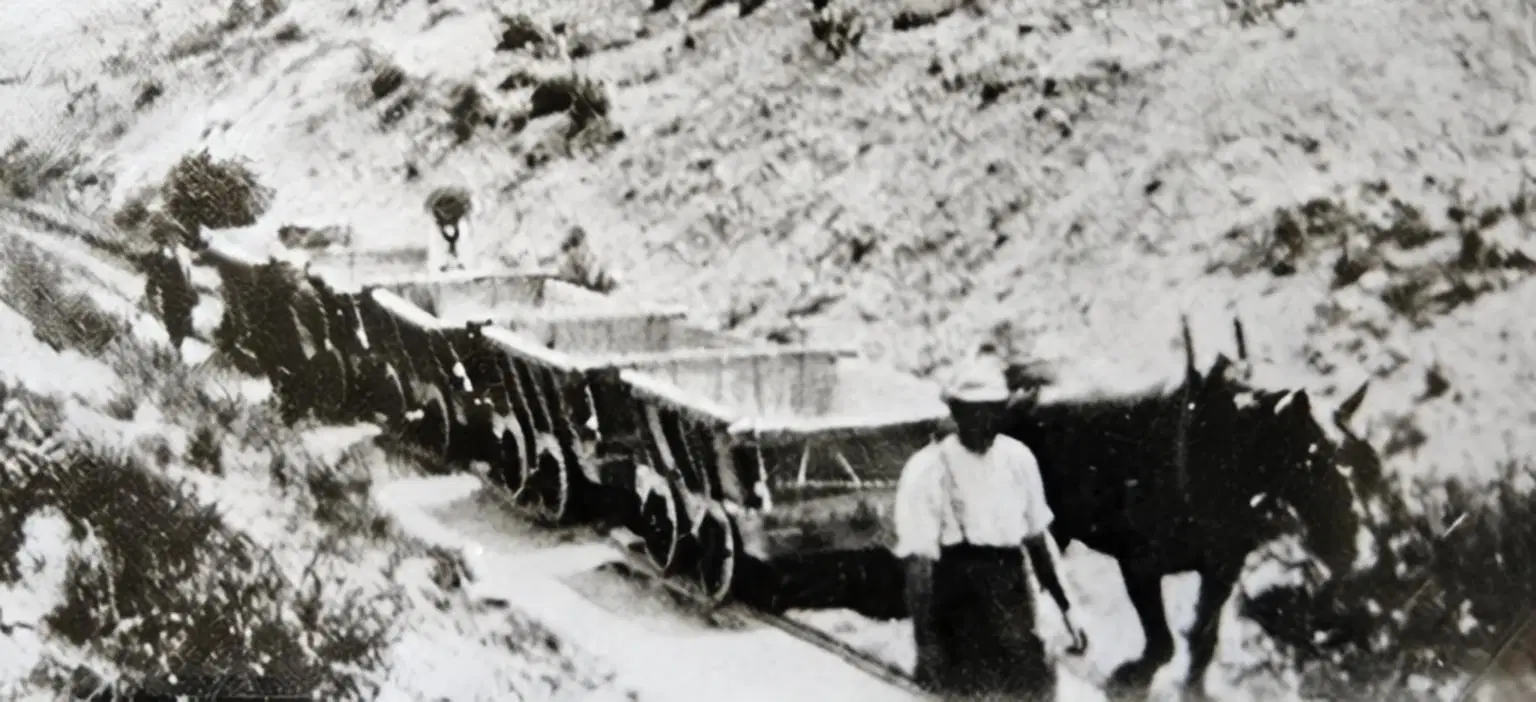
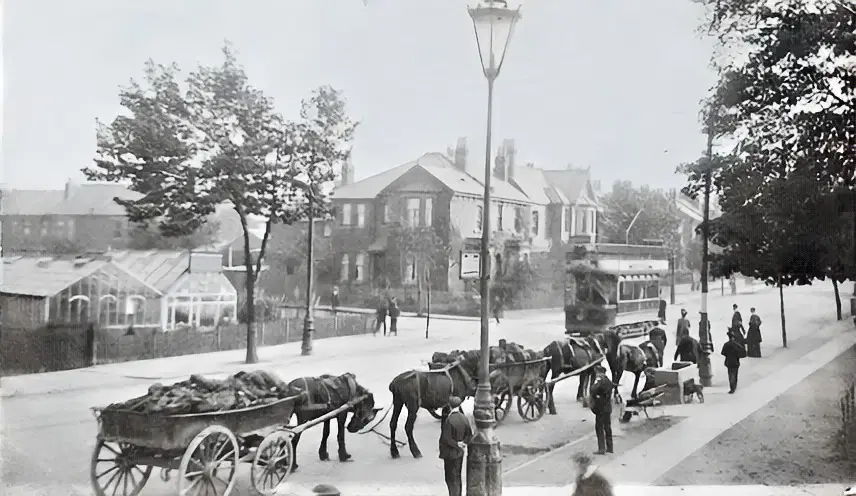
In July 1810 Charles Brandon Trye built a horse-drawn tram road from his quarries on Leckhampton Hill to connect with a line from Cheltenham to Gloucester Docks. It enabled stone to be carried to Cheltenham and afar via the River Severn.
Initially the tram road ran through open countryside, later forming the street pattern. The roads built along the line include Leckhampton Road, Norwood Road, Andover Road and Queen’s Road. There it joined the main line near to the present Lansdown station, which wasn’t built until 1840.
Great Norwood Street follows the line of a siding which once led from the Norwood triangle to stonemason’s yards at Grotten Wharf, near to Suffolk Road.
The line closed in 1861, by which time the streets had been built and the tracks were a nuisance to road traffic.
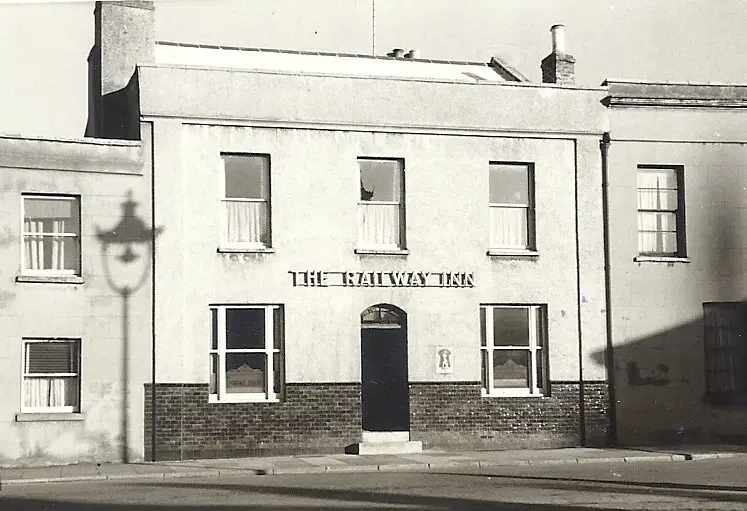
The Railway Inn was built in the early 1830s and is identified by a plaque. It was a centre for the local community but closed in 1968.
Take a minute to look at the bronze disc inlaid in the pavement which bears a copy of the seal of the old tram road company. It was placed here in 2008.
Walk south up Norwood Road until you reach The Norwood Arms.
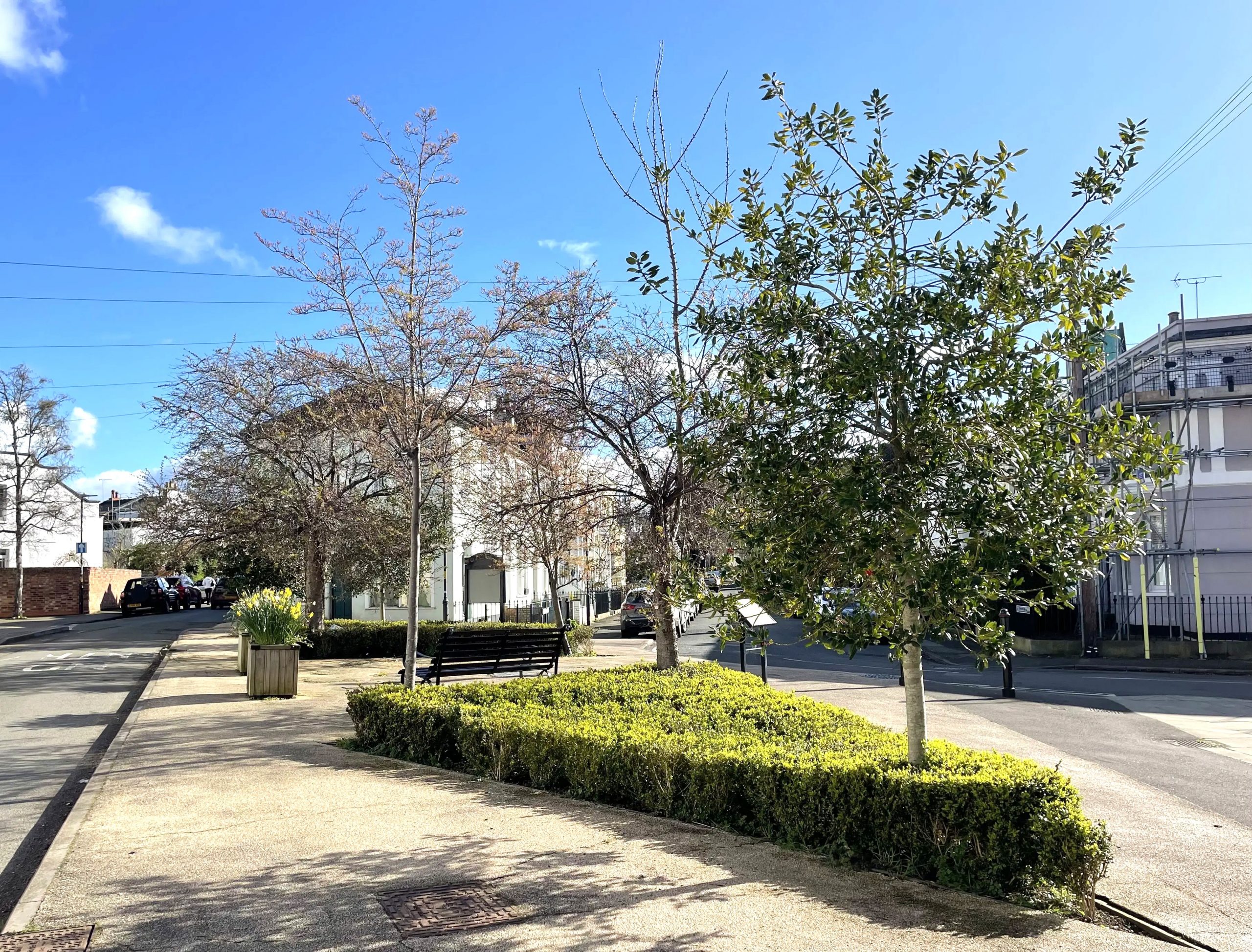
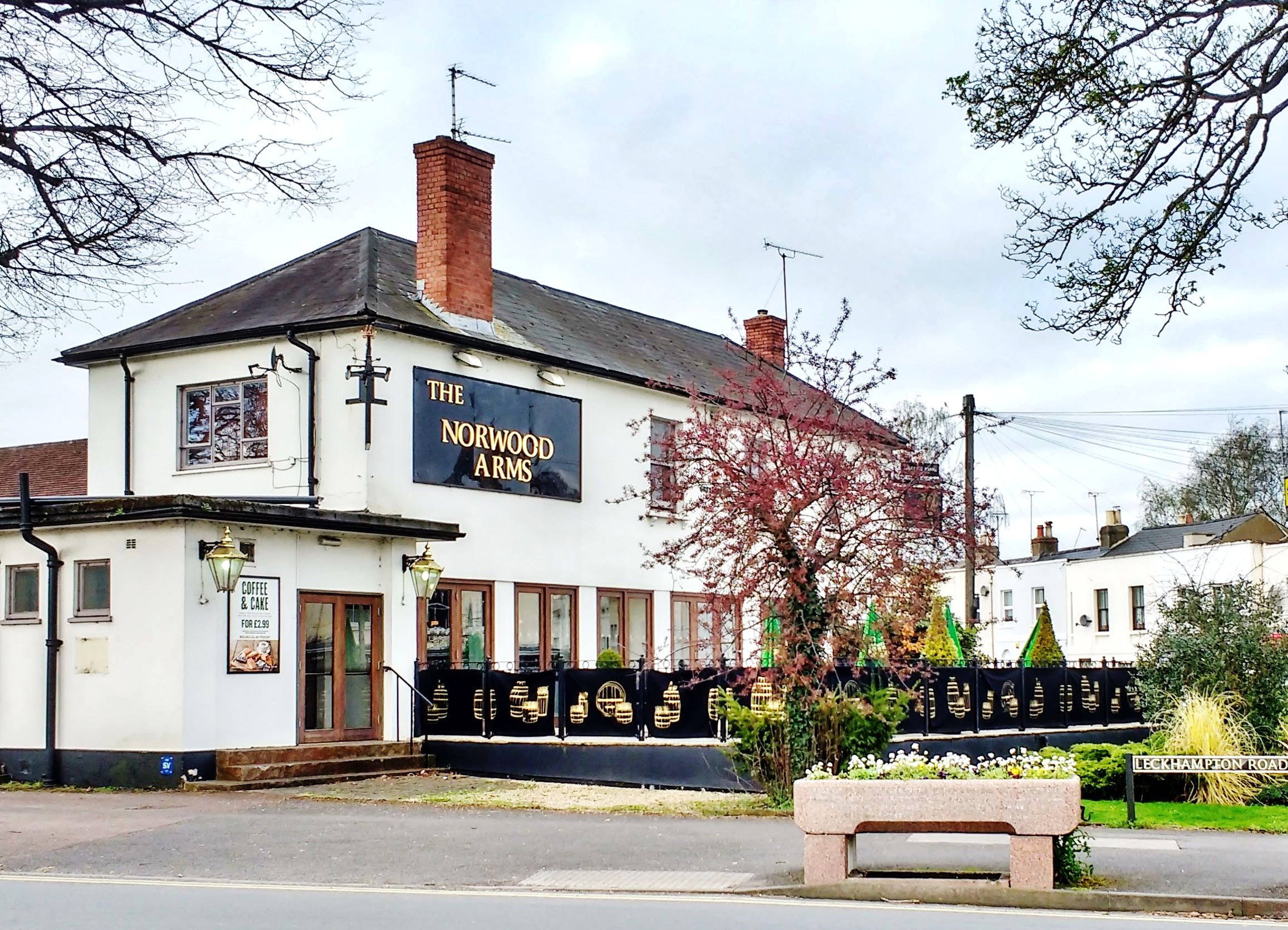
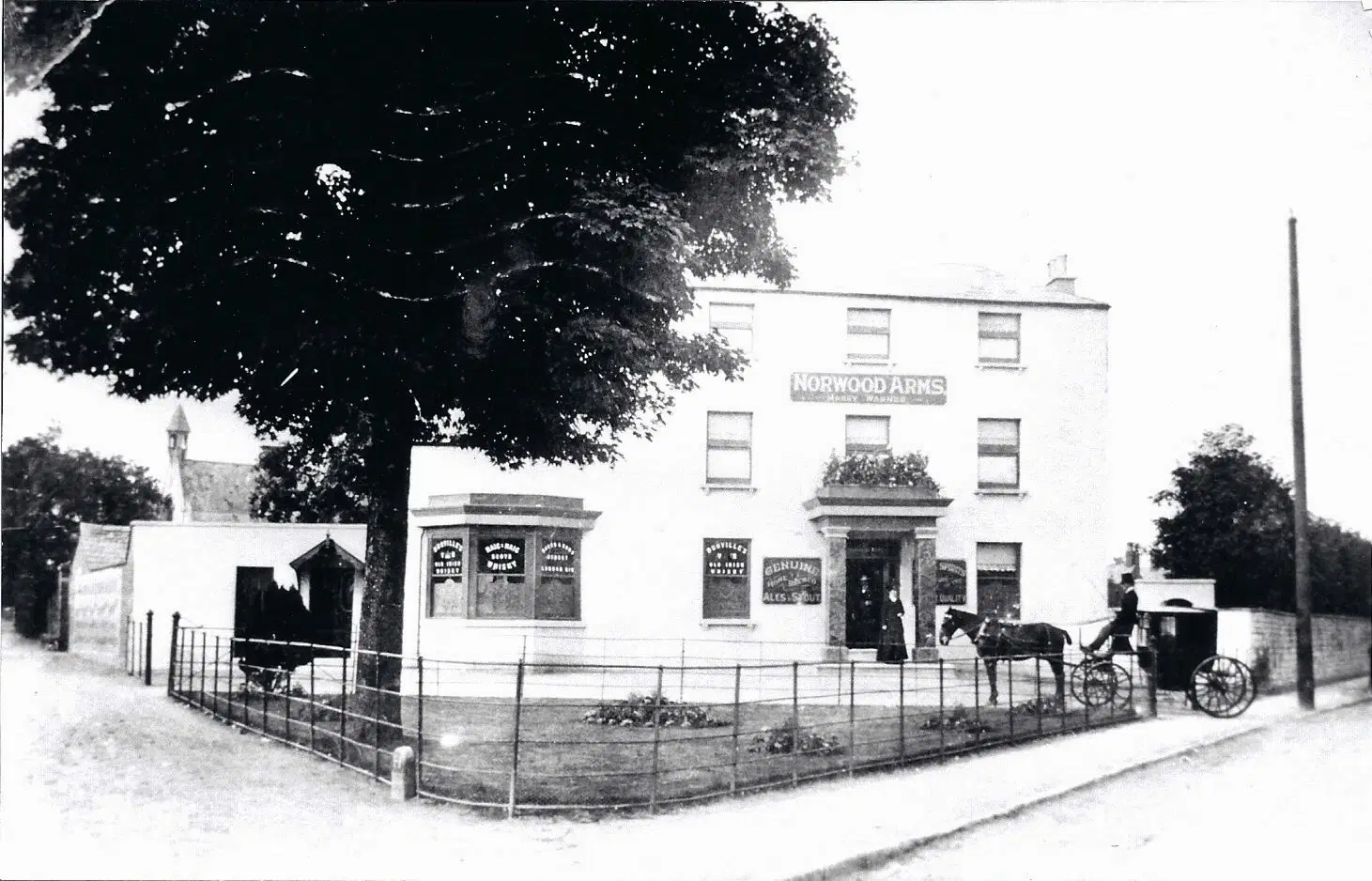
The Norwood Arms was named after the Lords of the Manor of Leckhampton and was built in 1821 as a southern gateway into Cheltenham. Two years later the New Bath Road & Shurdington Road were fully opened as toll roads, with a toll house near to the present small roundabout.
The inn was a welcome stopping place for the people taking part in the traditional practice of “beating the bounds” of the large parish of Leckhampton. The churchwarden’s accounts for the 1830s include 7 gallons of beer at 3d a pint!
But there were some troubling accounts of crime and drunkenness. In 1862 William Jones, who described himself as a tramp from New York, refused to pay for his drink. The landlord, Mr Henry Vines, followed him to other public houses in Bath Road where he used the same dodge. When arrested by the police Jones apparently made use of “the most disgusting language”!
After the tram road closed in 1861 the Bath Road toll house was dismantled and the weighing machine was sold off.
In 1884 the Ladies Society for the Protection of Animals donated the horse trough next to the inn. Ironically 30 years later Alfred Ebden of Churchdown was fined 10 shillings for kicking his horse when it refused to drink from this trough!
Walk north along Bath Road on the left hand pavement.
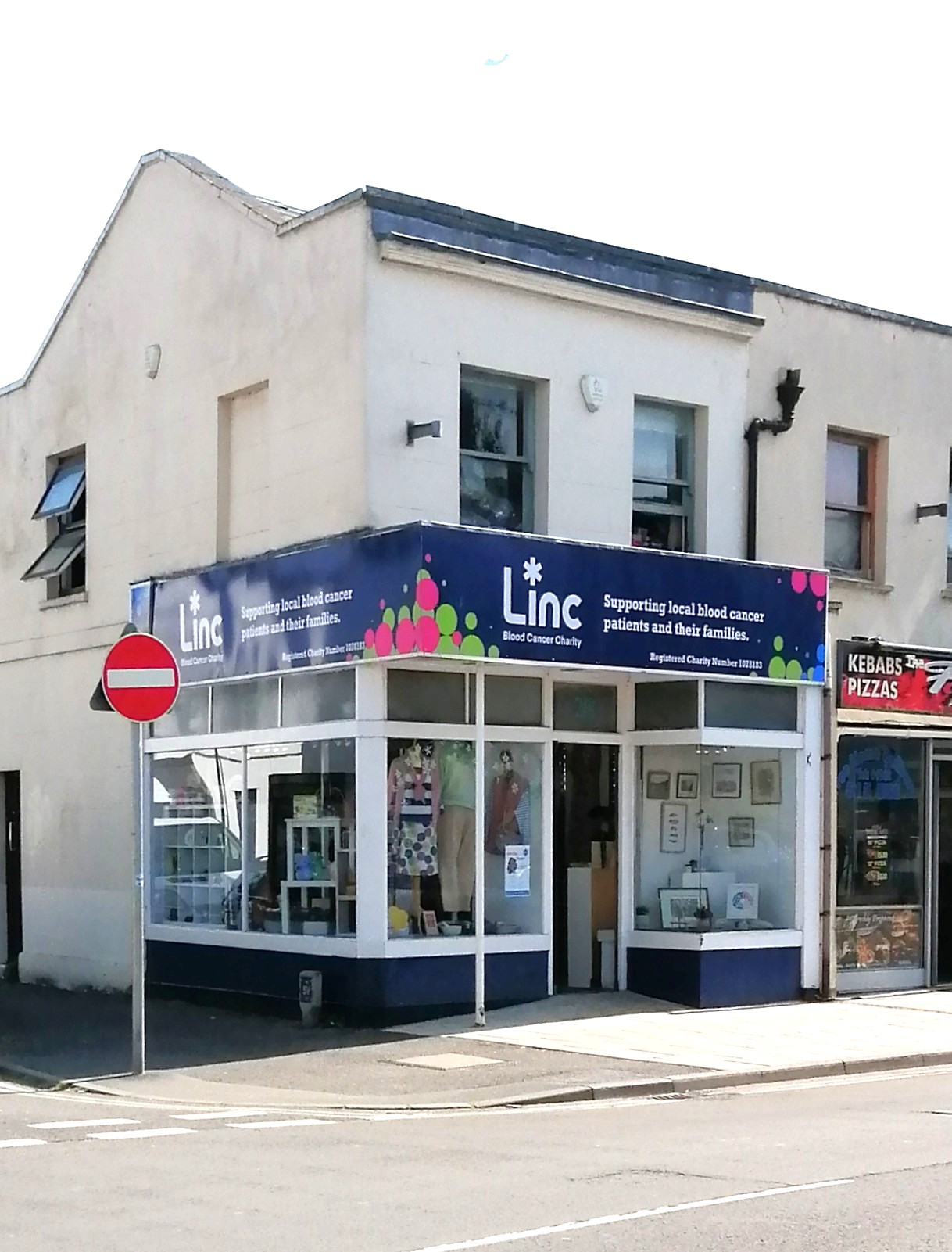
This was formerly 1 Hermitage Terrace, named after an 1820s house called ‘The Hermitage’ which stood on this site. It had stables, a coach house, outbuildings, a garden and a pleasure ground, and an adjoining one acre paddock. By 1842 The Hermitage had been replaced with this row of shops and the houses in Hermitage Street and Francis Street.
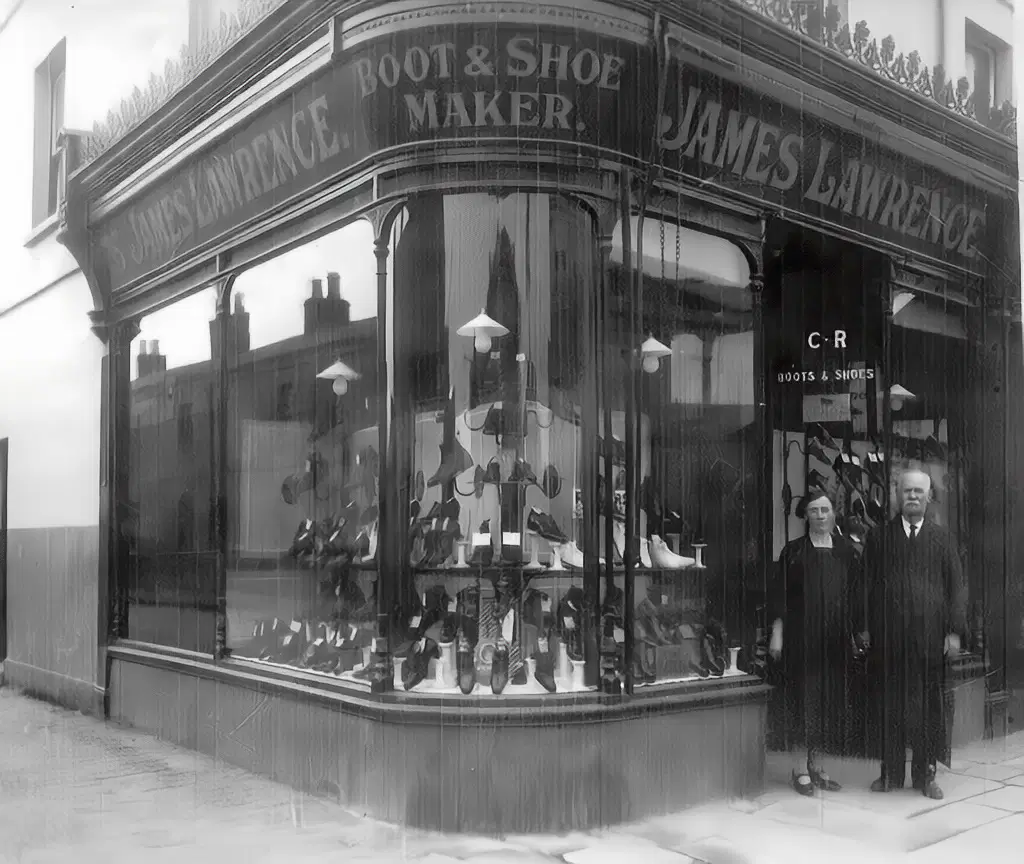
This shop at the corner of Hermitage Street was notable for having been a shoe shop for about 116 years, until 2019.
James Lawrence was born in Cheltenham in 1853. By the 1880s he and his wife Caroline lived in Naunton Crescent and started a shoe business there. This was truly a ‘cottage industry’. In 1903 these Bath Road premises became vacant and the business transferred here. James’ and Caroline’s two youngest daughters, Maud and Minnie, remained unmarried and helped their father run the shop.
James Lawrence died in 1939 at the age of 87 as one of the oldest tradesmen in the Bath Road. Minnie continued to run the business alone until about 1960 and the family retained an interest in the shop until 1974.
In 1983, an even older Cheltenham shoe-making family firm, Adcocks, took over. Matthew Adcock, a boot and shoe-maker, started his business at 304 High Street in 1879. His speciality was a clog made with a leather leg front for “carriage-washing and such purposes”. The fifth generation of the Adcock family was still selling shoes here in 2019.
Continue along Bath Road until you are opposite the Lee Longland furniture shop.
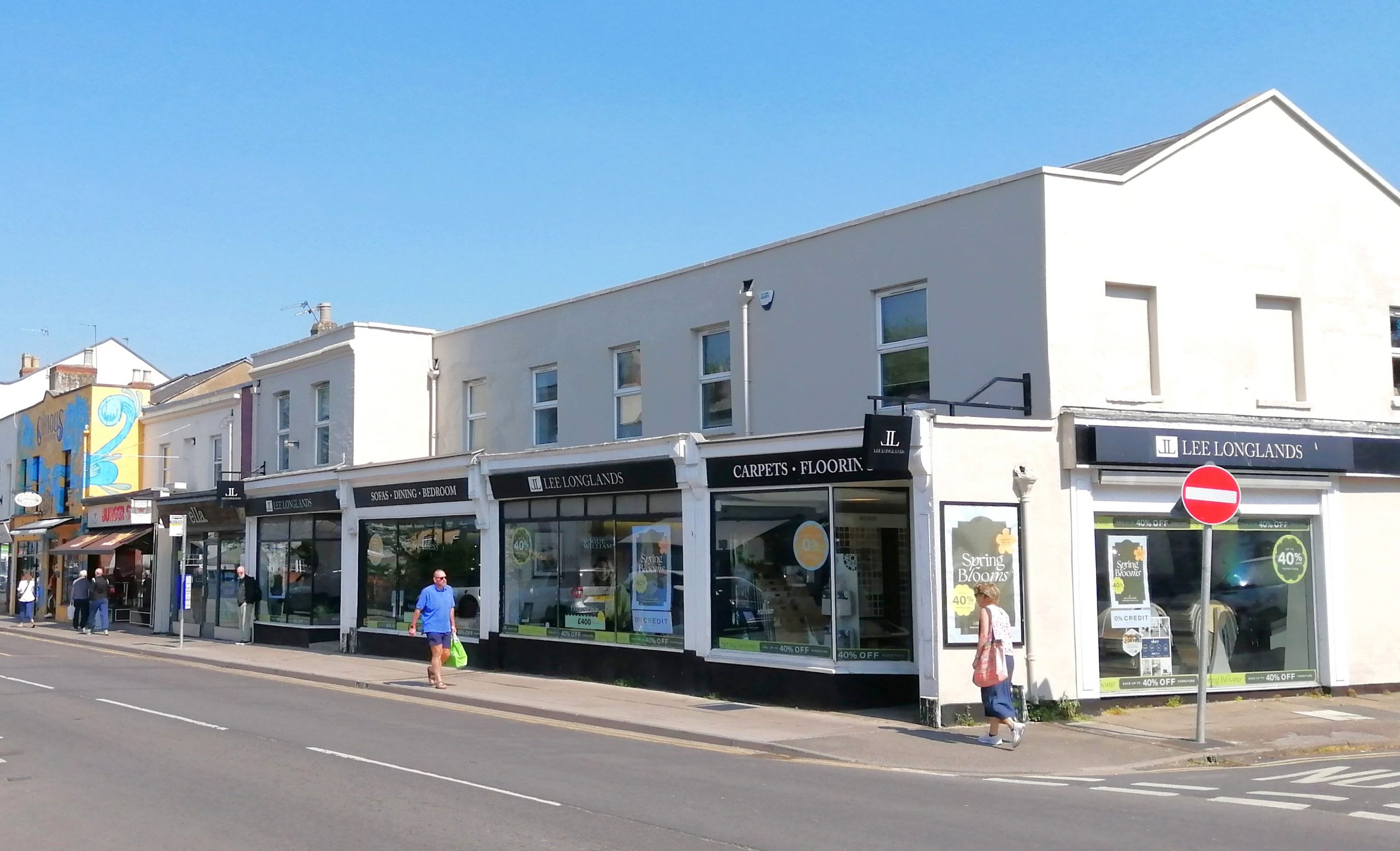
The right hand corner of this furniture retailer was formerly known as 6 Waterloo Terrace, which in 1857 was Charles Ballinger’s butcher’s shop. He was successful and after his death in 1899 his son, also named Charles, bought these premises for £340.
The young Charles was also a butcher but had a lucrative side-line teaching keep-fit lessons at Cheltenham College. A keep-fit enthusiast, Charles often challenged his customers to weight-lifting contests. On one occasion the challenger, unable to hold the weights, dropped them through the wooden floor, into the cellar below!
Some of the customers would delay settling their accounts for a whole year. Despite these difficulties Charles always found some meat for the poor at the end of the day. He closed the butchery at the start of the First World War in 1914, his sons having enlisted in the army. At the age of 43 he joined the Catering Corps and survived the war. On returning to England he resumed his trade as a butcher at St. Marks, in Cheltenham.
In 1969 Mr Chapman, who already had an adjacent furniture shop, extended it into these corner premises. He sold the shop in 1972 to Lee Longland of Birmingham, who now celebrate more than 120 years in the furniture business.
Walk until you are opposite the Red Cross clothing shop.
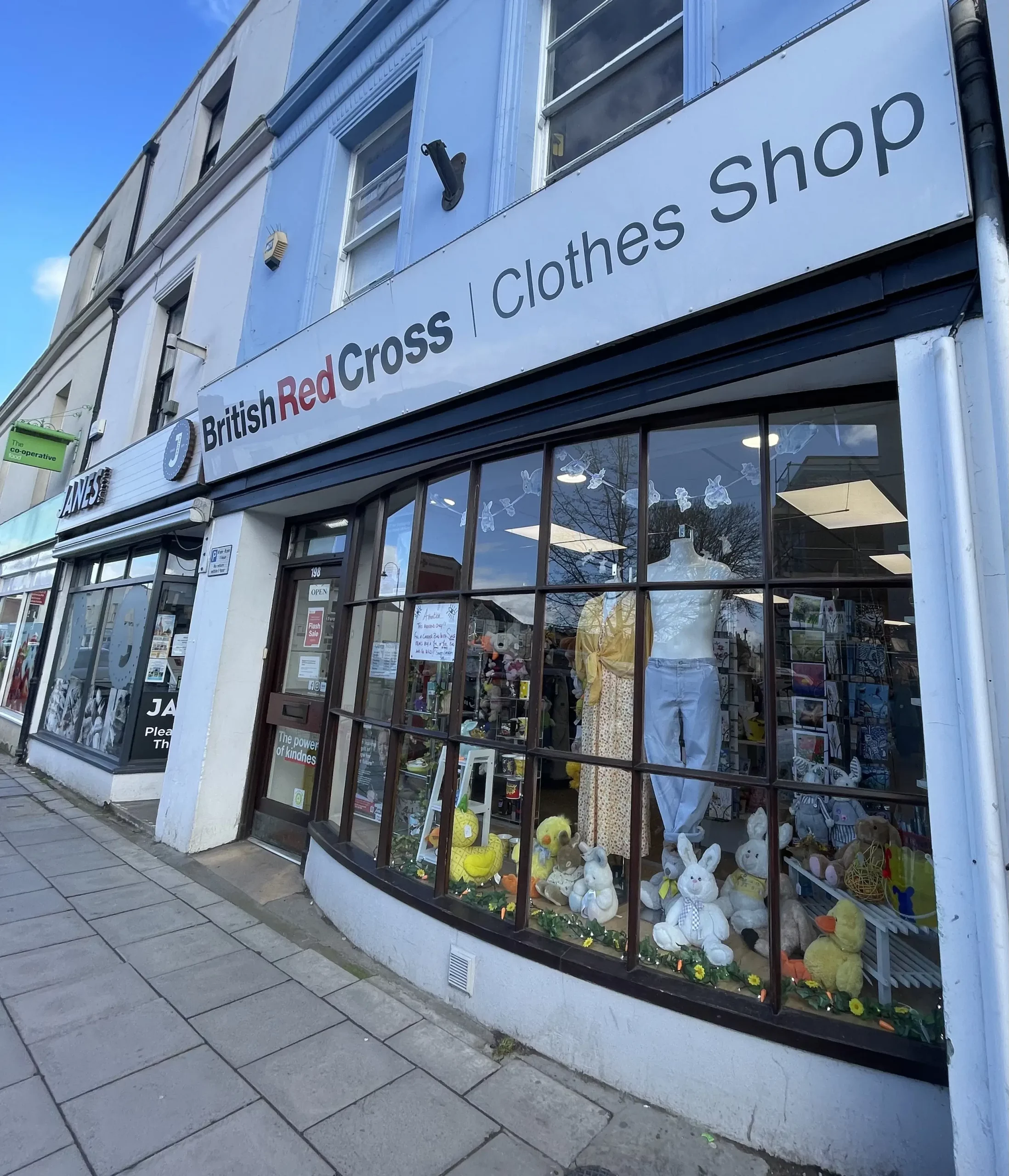
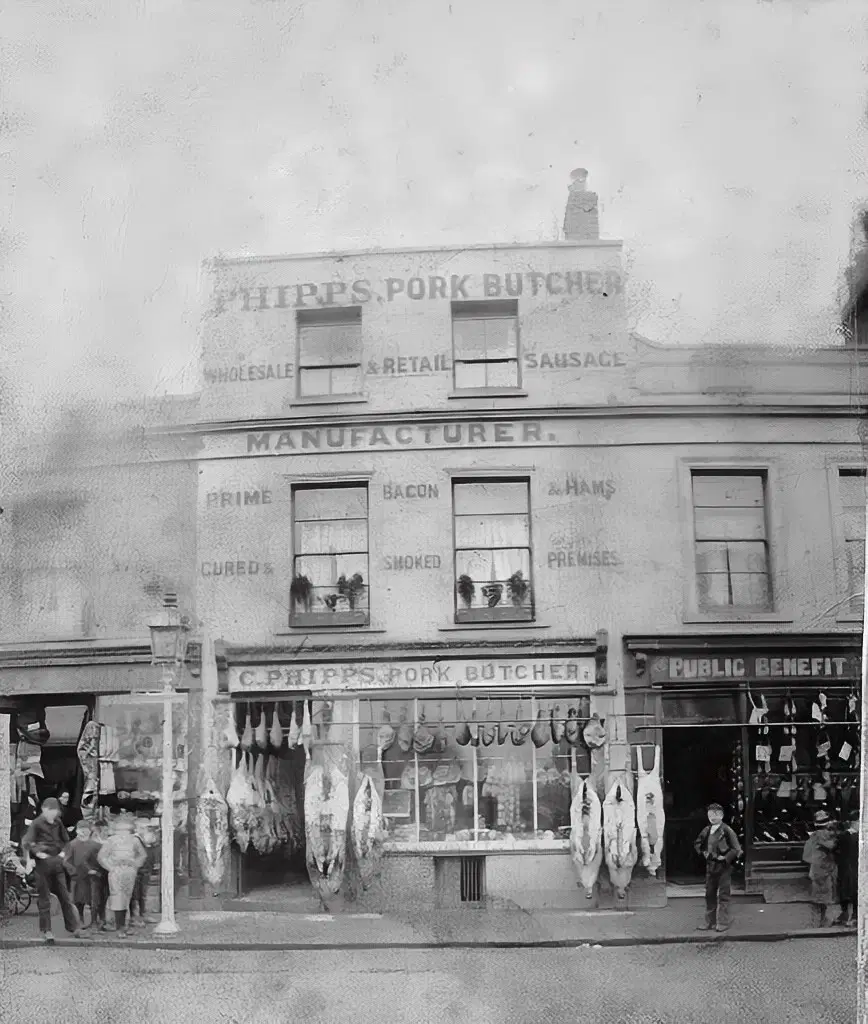
Between 1888 and 1905, the Red Cross clothing shop was owned by a pork butcher names Charles Phipps, who was born in 1841, at nearby Commercial Street. He married Emma Simmonds at St Philip and St James’ church in 1874 and they had several children. These were mostly daughters and three of them married local traders, indicating the closeness of the community. Charles retired from the business at the age of 64.
In 1922 the shop was owned by Mr Charles Winters, a fishmonger. It was good that the family lived upstairs as it opened at 6am and orders for kedgeree fish had to be delivered by boys on bicycles to the big houses in The Park, in time for breakfast. Charles’ son Gilbert inherited the business after his father’s death in 1929. Known playfully by his customers as Gil, he always wore his wellington boots and his hat in the shop.
Gil ordered fish by telephone for delivery the next day by lorries travelling overnight from Grimsby and other ports. Since there was no refrigeration, ice was collected from the ‘Ice Works’ in Albion Street by Gil’s son Ken, on a bike. Fish arrived packed in ice and was laid out on the ice in the shop.
Walk along to stand by the wall of the Exmouth Arms garden.
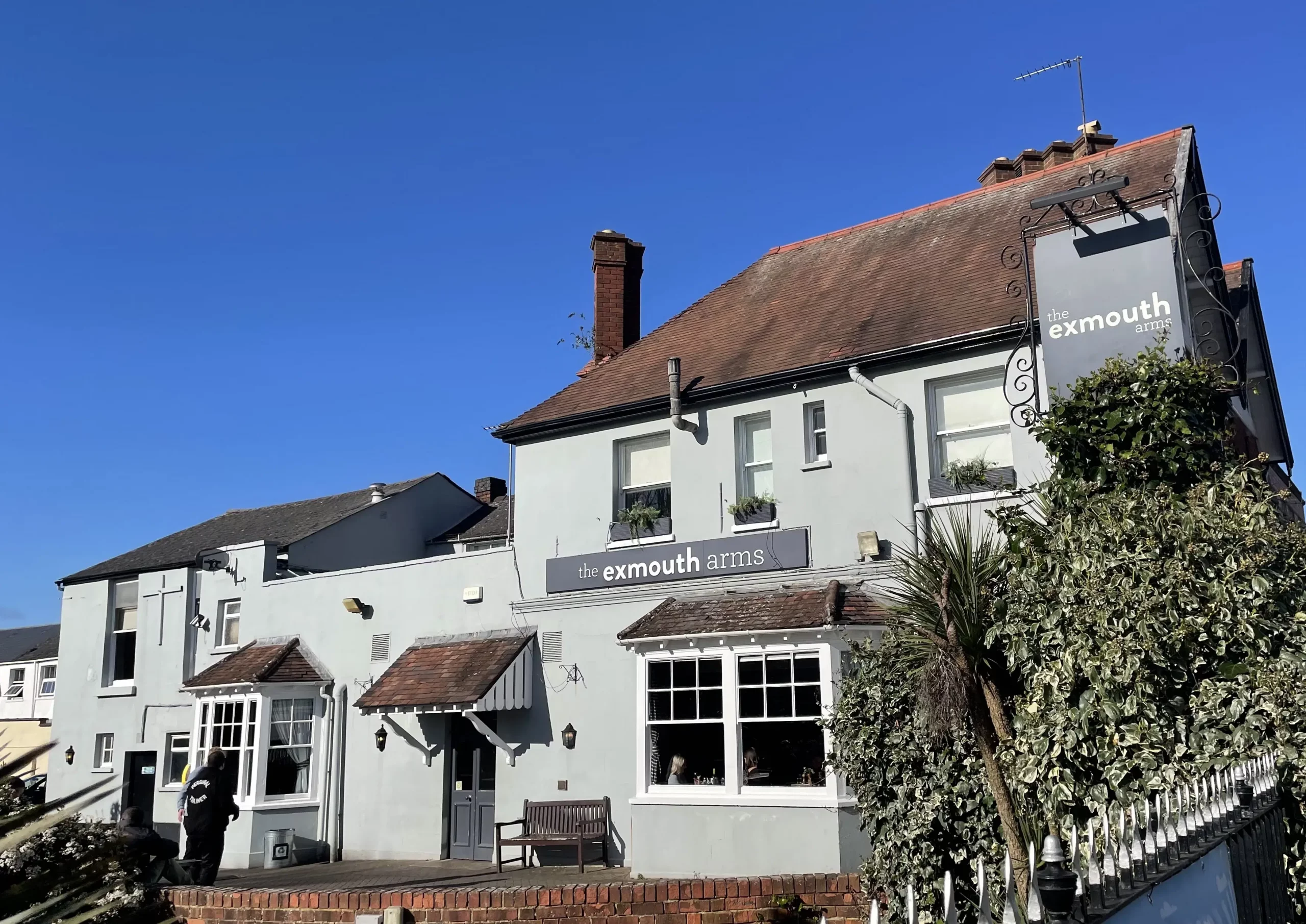
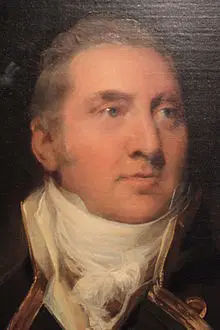
The Exmouth Arms was named after Vice-Admiral Edward Pellew, appointed Viscount Exmouth in 1816. In the autumn of that year he visited Cheltenham to convalesce after a Mediterranean sea battle.
This Regency building dates from before July 1819, when it was the venue for an auction of cereals growing in a nearby 20 acre field. The area then had a semi-rural appearance, though Cheltenham was rapidly developing. The Inn was at the southern gateway into town and is probably the oldest building in the Upper Bath Road. Its late Victorian appearance is due to alterations in 1898 by the landlord, James Kitching.
In 1821 a swimming pool was created at the west end of the Exmouth Arms garden, probably fed by the Westal Brook, which is now culverted under the road. The pool seems to have survived for about 10 years.
From at least the mid 19th century there was a bowling green in the garden and the Exmouth bowling club competed with teams from many of the neighbouring pubs. The green was ‘Dug for Victory’ in the Second World War and it is now used as allotments.
Proceed along the Bath Road and stand outside the Sue Ryder shop. Look first across the road, to your right.
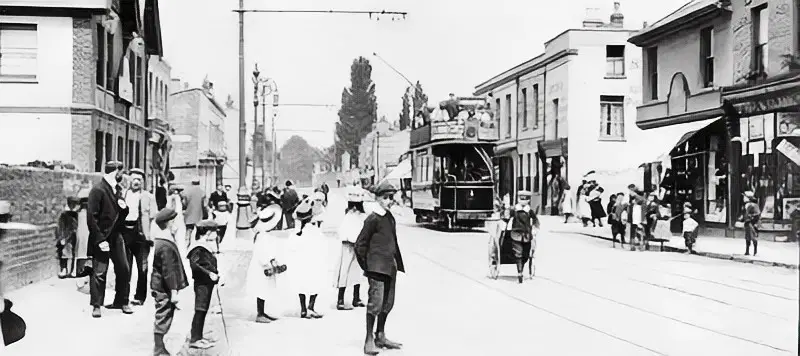
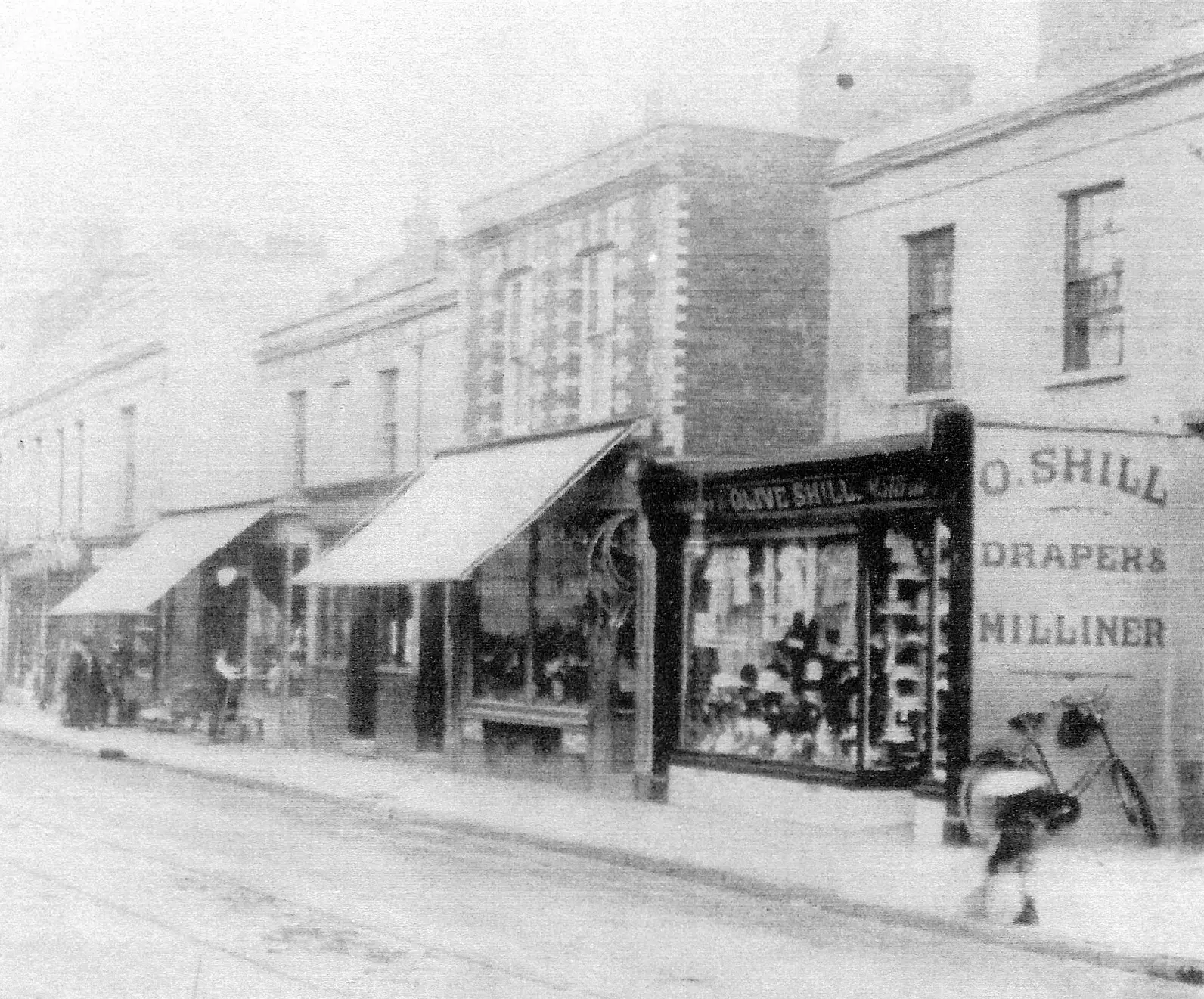
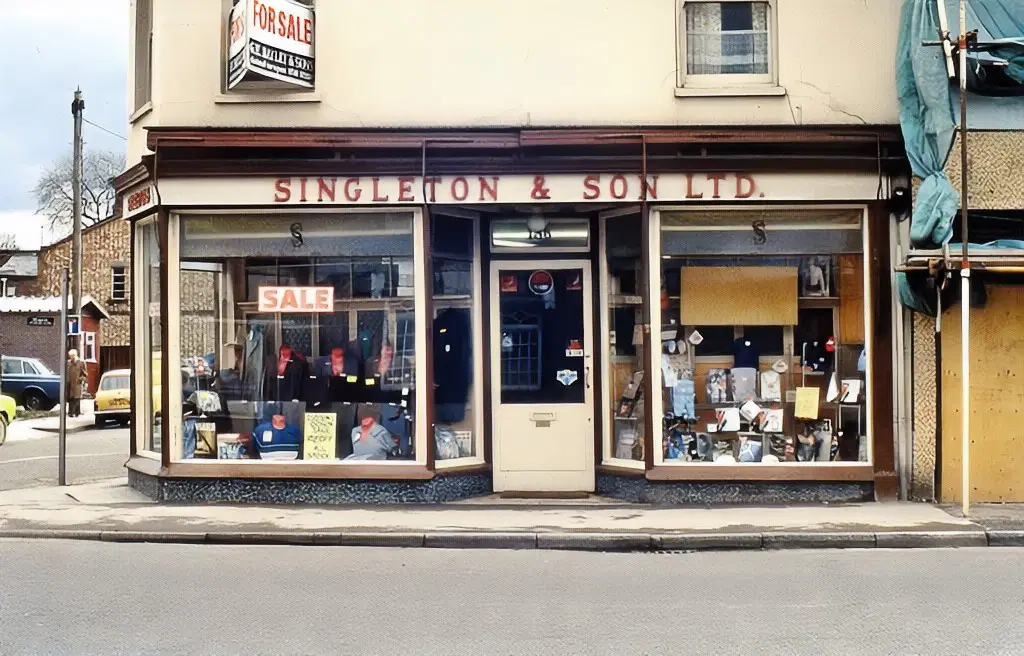
From the late 1880s, for more than 100 years, this was one of the shops belonging to Singletons the gentlemen’s outfitters. Benjamin and Samuel Singleton were brothers born in Newport on the Isle of Wight in the 1840’s.
Looking further back in time we come across an unfortunate mystery.
In the mid 19th century these premises formed a grocery and butcher’s shop belonging to Mr Alfred Wall. In March 1860 Alfred was fined 2 shillings and sixpence for allowing the carcasses of several animals to encroach onto the footway but two years later he was commended for an excellent display at the Cheltenham Annual Christmas Meat Show.
On 5th May 1878 Alfred Wall mysteriously disappeared from his house in Montpellier, after finishing his Sunday dinner. It seems that he caught a train from Lansdown station to Liverpool that evening.
Alfred hadn’t let his friends or family know where he was going and his absence caused considerable anxiety. On arrival in Liverpool he booked into a small lodging house and retired for the night.
In the morning the landlady couldn’t rouse him and, fearing the worst, called the police to break the door down. Entering the room they found him dead, on his knees with his head submerged in the domestic cold water tank, which was in one of the cupboards. At the inquest into his death the jury could only return a verdict of “found drowned”. There has never been an explanation of this tragic and curious event.
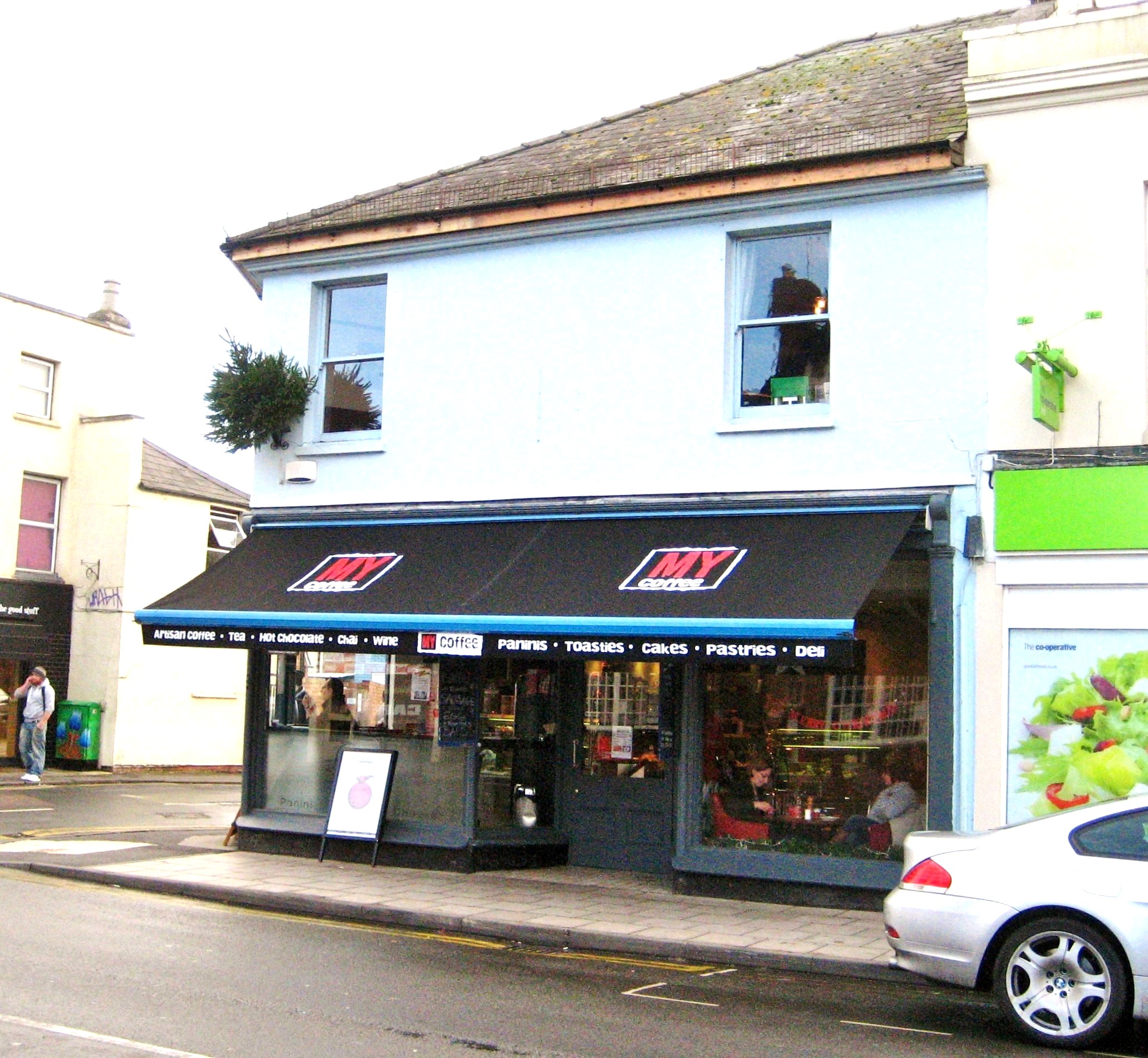
In 1911 Mr William Newman, who had traded as an ironmonger in The Exmouth Buildings opposite since 1905, moved to these bigger premises. His son Vic worked with him, continuing the business after William died in 1918. The hours were long, the shop opening at 8 am each day, closing at 7 pm Monday to Friday and at 9pm on Saturdays.
The ironmonger’s shop was always ‘chock-a-block’ with goods. Nails, screws and other small items were stored in large bins and were sold by the pound in weight, whilst other items were kept in drawers behind the wooden counter. Putty for fixing windows was taken from large tubs and wrapped in newspaper.
Two or three deliveries a day were made to the shop, the goods coming to Cheltenham by rail and then on to the shop by horse and cart, and later by van.
Vic Newman was a fire watchman during the Second World War. On the night of 11th December 1940 he was off duty but there was a heavy bombing raid, so he decided to check his shop for incendiaries. He was in the cellar when an oast house (drying house) at the rear of the adjacent pub was hit and fell across the doorway, trapping him inside. He was fortunate to be able to scramble through a small opening to safety.
The air raid began at about 7.30pm and waves of bombers flew over Cheltenham until after midnight. Sadly, twenty-three people lost their lives and 600 were made homeless in that single raid.
Walk further along the pavement to Bath Road Cards.
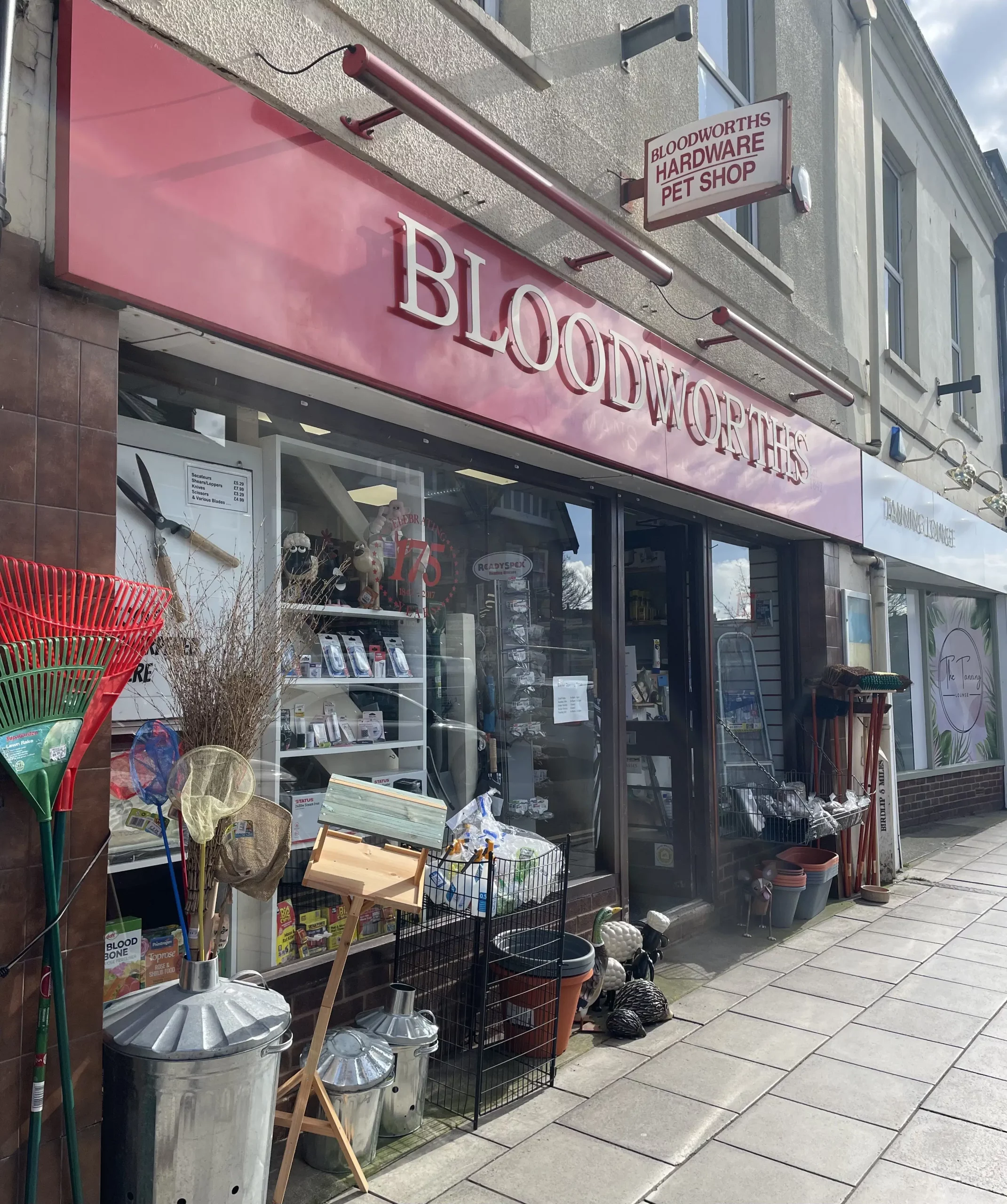
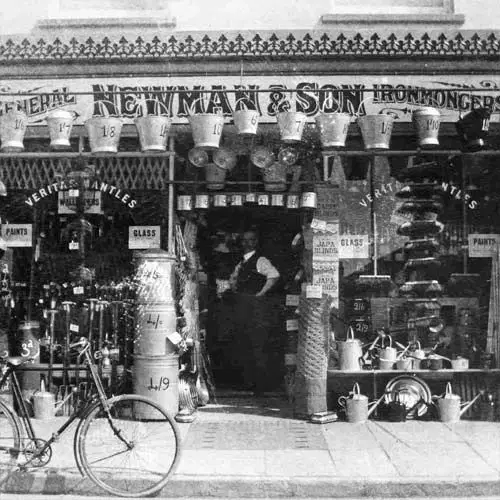
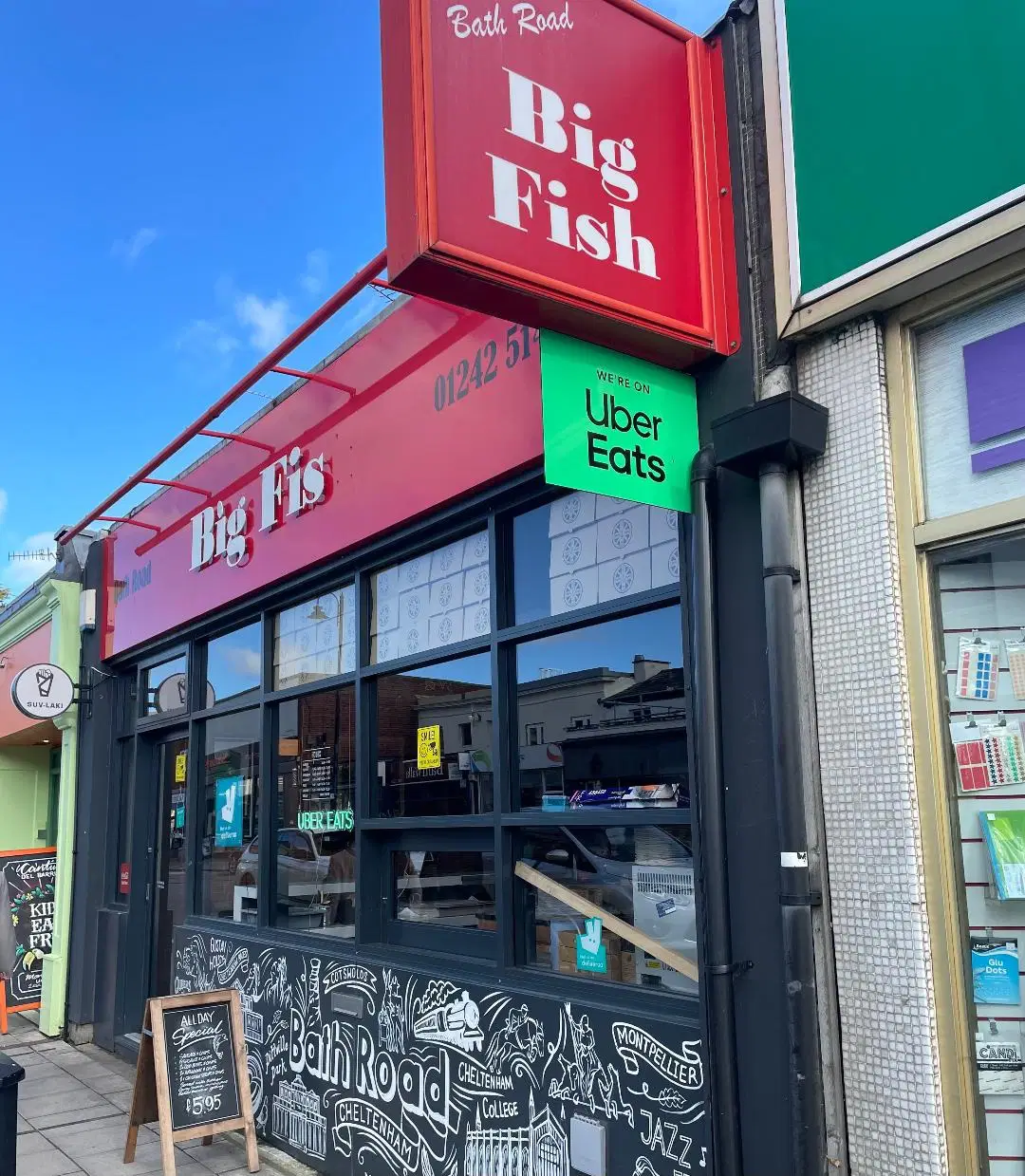
In 1889 this was the home of a Post Office clerk called William Woodward, together with his wife and five children. The house had a front garden at the time and the children played in the street, long before electric trams and motor vehicles and before the premises were converted into a hardware shop.
During the First World War the shop became a National Restaurant, otherwise known as a ‘communal kitchen’. Local authorities set up such kitchens to cook nutritious food at affordable prices and customers would use their own dishes to take the food home to eat.
By 1920, electrician Arthur Chapman lived here with his wife Mary and their children. The hardware shop was double fronted; in one window Arthur had a black china cat and in the other a black china dog. He replaced the eyes on both creatures with flashing lights. On one occasion an elderly gentleman passer-by was quite cross with him saying it was an outrageous waste of electricity!
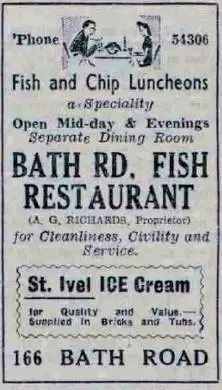
In 1924 this became a fish and chip shop called ‘The Bath Road Supper Rooms’. The first fish fryer, Mr Thomas Nicholson, cooked using coal and local people could tell how burnt the food was by the blackness of the smoke from the chimney!
By 2024 fish and chips had been served here for 100 years.
Cross the road and walk northward until you are at the front of Thirlestaine House, the large neo-classical mansion.
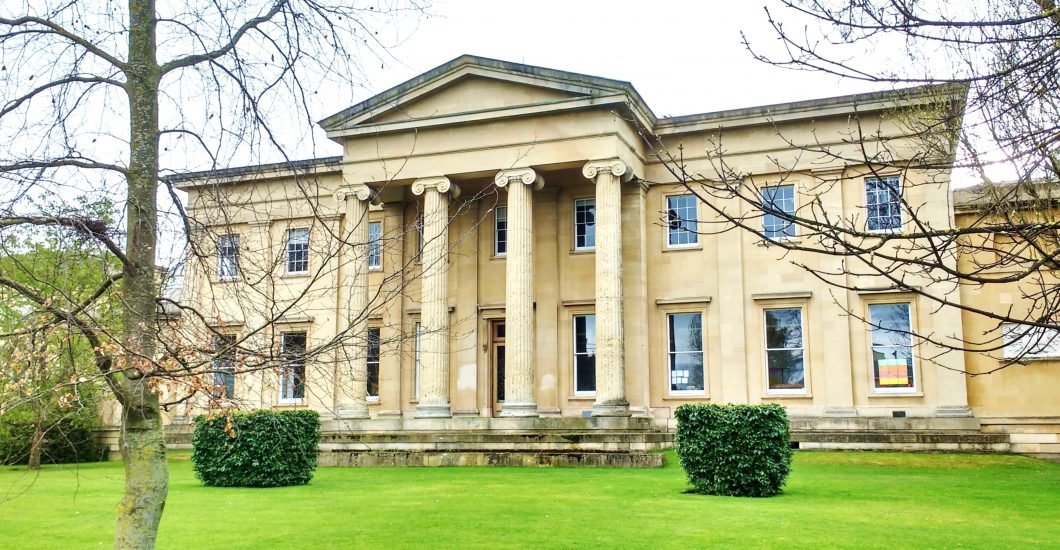
Now part of Cheltenham College, Thirlestaine House was built between 1820 and 1823 by James Robert Scott.
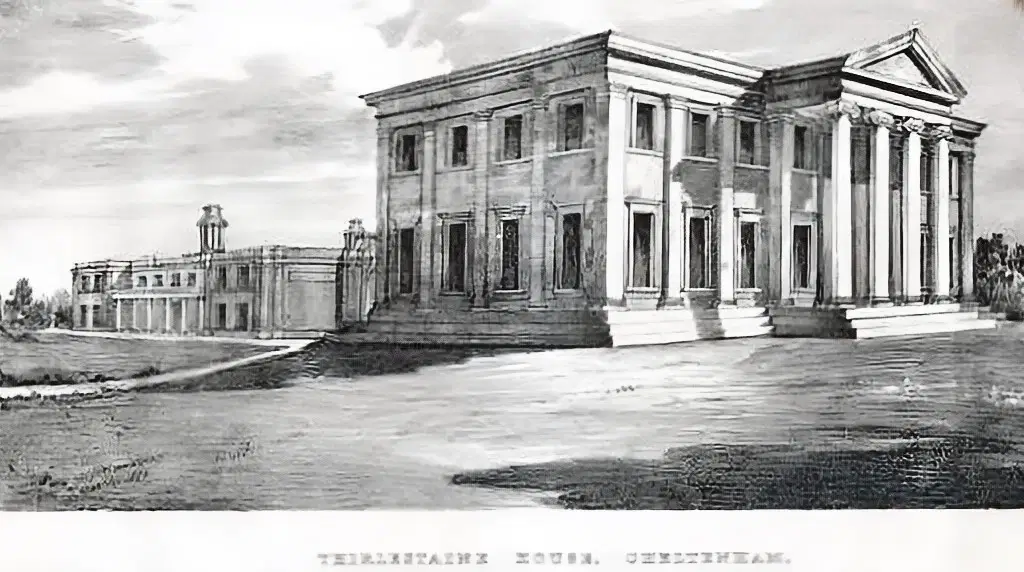
The mansion originally consisted only of the central portion and was approached from two entrances on the Bath Road by means of a sweeping carriage drive. At the rear of the house another great block contained stables, offices, a conservatory and a grapery.
Thirlestaine House came up for sale in February 1831, when it was described as a “splendid freehold mansion”, “on the outskirts of Cheltenham”. The house had a suite of 5 rooms connected by massive double doors and a kitchen and cellars similar to those at the Royal Pavilion in Brighton.
It was bought in 1838 by the 2nd Baron Northwick, owner of Northwick Park, near Blockley and an avid art collector.
Eventually Lord Northwick’s art collection outgrew the space, so he added two wings in the 1840s, making the building about 300 feet long. The gallery included works by Titian, Leonardo da Vinci, Holbein, Bellini, Rubens and Velasquez. It was one of the finest in collections Britain but was dispersed after his death.
You have now reached the end of your walking tour. Stroll back to browse the shops, pubs and cafes and enjoy a well-earned refreshment.
For more information about all of the places mentioned above and more, see our Cheltenham South Town website www.cheltenhamsouthtown.org.uk
If you have enjoyed this Cheltenham Local History Society walk do explore our other historical Cheltenham walks. Or, to find out about becoming a member, click here.